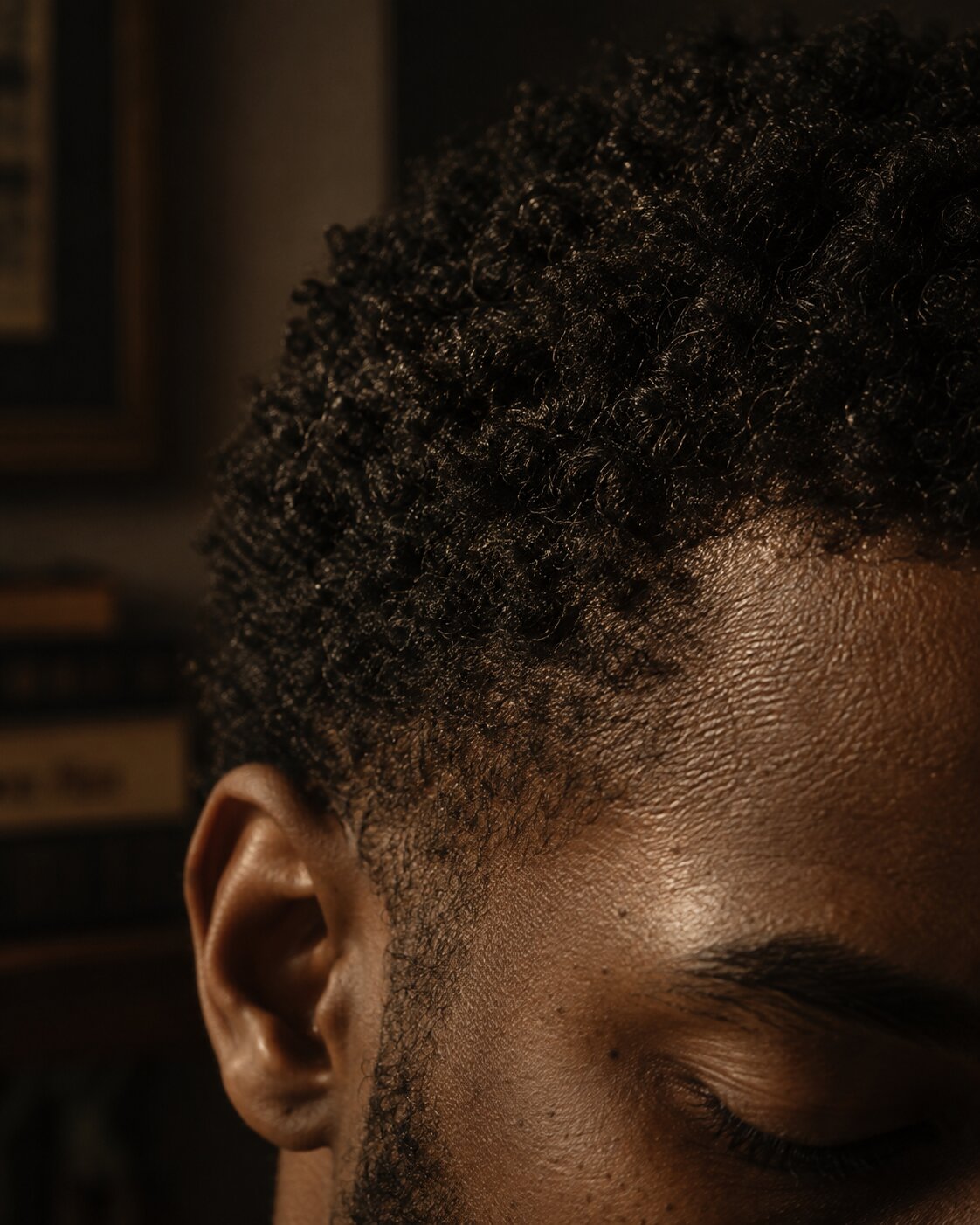
A good shave is controlled.
Not just close.
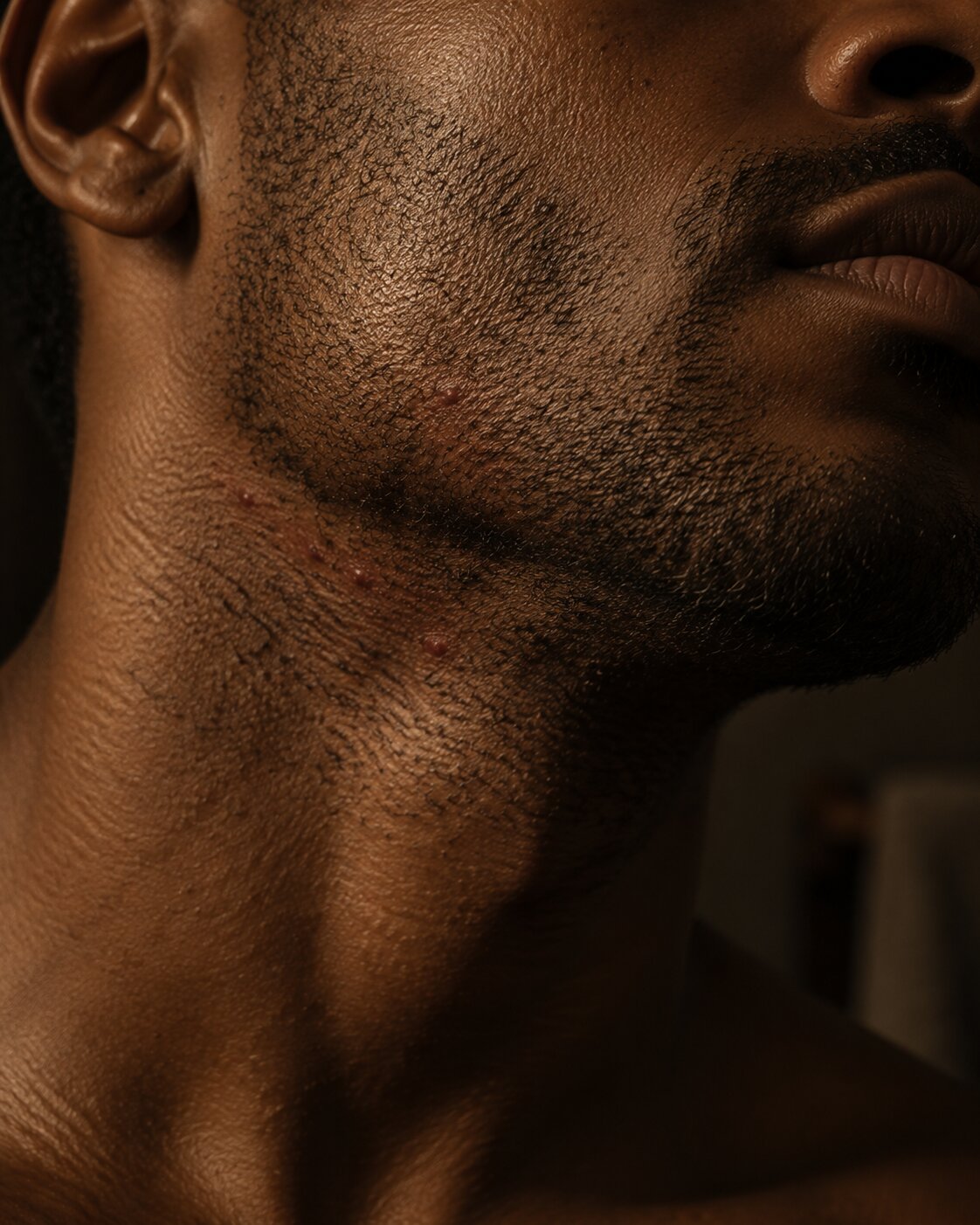
MAINTENANCE
Less irritation.
Fewer ingrown hairs.
Calmer skin.
A maintained face should not
come at the cost of damage.
Why Razor Bumps Happen More Often for Black Men
Razor bumps often happen when shaved hair curls back into the skin instead of growing outward.
This is more common with facial hair that is coarse, curly, or tightly coiled. When the hair is cut too close, the sharpened end can re-enter the skin and cause irritation. The skin reacts with bumps, tenderness, itching, redness, swelling, or dark marks.
For many Black men, the neck and jawline are the most difficult areas.
The hair may grow in several directions. The skin may be more reactive. A very close shave can look clean for a few hours and then leave bumps for days.
The goal is not the closest shave possible.
The goal is a clean, controlled shave that respects the way the hair grows.
What causes the problem
Razor bumps can be triggered by:
- Shaving too close
- Shaving against the grain
- Pressing too hard
- Stretching the skin while shaving
- Using dull blades
- Using multi-blade razors that cut hair too low
- Repeating too many passes over the same area
- Shaving over active bumps
- Aggressive barber lineups
- Poor aftercare
A man should pay attention to what his skin keeps telling him.
If the same method creates bumps every time, the method needs to change.
Let the Skin Heal Before You Keep Shaving
Active bumps need time.
Shaving over irritated skin keeps the cycle going. The blade cuts over raised bumps, opens the skin, creates more inflammation, and makes new marks more likely. A man may think he is maintaining his face, but he is actually repeating the damage.
When the skin is inflamed, the standard should shift from shaving close to calming the area.
When to pause close shaving
Stop close shaving for a while if there is:
- Painful bumps
- Bleeding
- Pus-filled bumps
- Burning after shaving
- Thick clusters of bumps
- New dark marks after every shave
- Skin that feels raw or tender
This does not mean neglecting the face.
It means trimming instead of shaving down to the skin. Clippers, a guarded trimmer, or a less aggressive electric tool can keep the beard area controlled while the skin settles.
What to do while the skin heals
During a healing period:
- Trim instead of shaving close.
- Do not pick or squeeze bumps.
- Cleanse gently.
- Moisturize daily.
- Avoid harsh scrubs.
- Avoid alcohol-heavy aftershaves.
- Keep the area protected from sun when treating marks.
A trimmed face with calm skin is more kept than a close shave with a damaged neck.
Do Not Chase the Closest Shave
The closest shave is not always the best shave.
For men prone to razor bumps, shaving too close can cut the hair below the surface. As the hair grows back, it can curve into the skin and create an ingrown hair. The smoother the shave feels at first, the more trouble it may create later.
A clean shave should not leave the skin punished.
Leave a small amount of space
For many men, a slightly less close shave is the better choice.
That may mean:
- Using clippers instead of a razor
- Using a guarded trimmer
- Choosing a single-blade razor
- Avoiding repeated passes
- Not shaving against the grain
- Leaving very slight stubble on the neck
This is not lowering the standard.
It is choosing the standard that keeps the skin healthy.
Watch the neck closely
The neck often needs more restraint than the cheeks.
Hair may grow in different directions around the throat, jaw, and under the chin. Shaving against the grain in this area can create irritation quickly. If the neck is where bumps happen most often, treat it as a sensitive zone.
Less pressure.
Fewer passes.
No chasing smoothness.
Choose the Right Tool
The right shaving tool depends on the skin, hair, and routine.
There is no single tool that works for every man. Some men do better with clippers. Some can use a single-blade razor. Some prefer a double-edge safety razor. Some can use an electric shaver carefully. The test is not what looks best on the shelf.
The test is what leaves the skin calm.
Electric trimmers and clippers
For many Black men prone to bumps, trimmers or clippers are the safest starting point.
They leave the hair slightly above the skin instead of cutting it extremely close. That can reduce the chance of the hair curling back into the skin.
Use them for:
- Neck maintenance
- Beard shaping
- Daily or frequent cleanup
- Healing periods
- Men who cannot tolerate razor shaving
Choose a guard or setting that keeps the skin calm.
Single-blade razors
A single-blade razor can be useful because it is less likely to cut the hair below the skin compared with some multi-blade cartridges.
It still requires proper technique.
Use:
- Light pressure
- Short strokes
- Shaving cream or soap with good glide
- Clean, sharp blades
- With-the-grain passes
A single blade used carelessly can still irritate the skin.
Double-edge safety razors
A double-edge safety razor can work well for men who take time to learn the technique.
It allows more control than many cartridge razors, but it should not be rushed. The angle, pressure, and blade choice matter. Start slowly. Do not use it to chase a perfectly smooth neck.
For razor-bump-prone skin, one gentle pass with the grain is usually better than multiple aggressive passes.
Multi-blade cartridge razors
Multi-blade razors can be a problem for some men.
They are designed to create a close shave, but that closeness can cut the hair too low. The first blade may lift the hair and the next blades may cut it beneath the surface. For tightly curled hair, that can increase the chance of ingrown hairs.
Not every man reacts badly to them.
But if bumps keep returning, the cartridge may be part of the problem.
Prepare the Skin First
Preparation matters.
Dry, rushed shaving increases friction. Friction increases irritation. Irritation increases the chance of bumps and dark marks.
The skin and hair should be softened before shaving.
Start with warmth
Warm water helps soften the hair and prepare the skin.
Good options:
- Shave after a warm shower.
- Hold a warm, damp towel on the beard area for a few minutes.
- Rinse the face and neck with warm water before applying shave product.
Do not shave dry.
Do not shave quickly over tight, unprepared skin.
Cleanse gently
Use a gentle cleanser before shaving.
This removes sweat, oil, dead skin, and buildup that can interfere with the blade. Avoid harsh scrubs right before shaving if the skin is already prone to irritation.
Clean skin gives the shave a better surface.
Use a proper shave cream or soap
The blade needs glide.
A good shave cream, shave soap, or gel should reduce friction and keep the razor from dragging. If the product dries quickly or feels thin, it may not be giving enough protection.
Look for:
- Good slip
- Cushion
- No heavy burning
- No strong alcohol feel
- Enough moisture for the full shave
Reapply product if needed.
Never keep shaving over bare skin.
Shave With the Grain
Shaving with the grain means shaving in the direction the hair grows.
This matters because shaving against the grain cuts closer and increases the chance of irritation. Around the neck, the grain can change direction in different sections. A man should learn his own growth pattern instead of assuming every area grows downward.
Map the beard
Before shaving, feel the direction of growth.
Use the hand to check:
- Cheeks
- Jawline
- Chin
- Under the chin
- Neck
- Mustache area
The direction that feels smooth is usually with the grain. The direction that feels rough is against it.
Shave with the direction of growth first.
For many men prone to bumps, that may be the only pass needed.
Use light pressure
The razor should glide.
Do not press hard to make the shave closer. Pressure increases irritation and can cut the hair too low. Let the tool do the work.
Use:
- Short strokes
- Light pressure
- Clean blade
- Rinsing between strokes
- One pass where possible
If one area is not perfectly smooth, leave it.
Smoothness is not worth inflammation.
Keep the Routine Controlled
A shaving routine should be repeatable.
If every shave involves rushing, scraping, adjusting, burning, and hoping the skin does not react, the routine is not controlled. A good routine should reduce variables and protect the skin from repeated irritation.
Control the frequency
Some men cannot shave close every day.
That is not a failure. It is information. The skin may need more time between shaves. Trimming between shaves may be better than putting a blade to the neck every morning.
Try adjusting frequency:
- Trim daily if needed.
- Shave every other day.
- Shave two to three times weekly.
- Reserve close shaving for specific occasions.
The skin should decide the frequency.
Not habit.
Keep blades clean and sharp
A dull blade drags.
A dirty blade creates more risk. Use clean tools and replace blades before they become rough. If a razor starts pulling, scraping, or requiring pressure, it is no longer serving the skin.
Basic tool discipline:
- Rinse blades during shaving.
- Let tools dry properly.
- Replace blades often enough.
- Clean trimmers and clippers.
- Do not share razors.
- Store tools somewhere dry.
Tools that touch the face should be maintained like any other object worth keeping.
Avoid shaving over irritation
Do not shave directly over active bumps when possible.
That is how bumps become cuts, scabs, scars, and dark marks. Work around irritated areas or trim instead until the skin calms down.
A man should not damage the skin to look maintained.
Use Aftercare That Calms the Skin
Aftercare should calm the skin.
It should not burn, sting, dry the face out, or make the neck feel tight. The skin has already been through friction. The next step should reduce irritation and support recovery.
Right after shaving
A simple aftercare routine can look like this:
- Rinse with cool water.
- Pat dry with a clean towel.
- Apply a calming aftershave or treatment if tolerated.
- Moisturize.
- Use sunscreen during the day.
Do not rub the face aggressively with a towel.
Pat it dry.
Ingredients that may help
Some ingredients may help with bumps or irritation when used correctly:
- Witch hazel: Can feel calming for some men, but avoid versions that are alcohol-heavy or drying.
- Salicylic acid: May help with clogged pores and ingrown-prone areas.
- Benzoyl peroxide: May help if bumps are inflamed or acne-like, but it can be drying and can bleach fabrics.
- Niacinamide: Can support the skin barrier and calm the look of irritation.
- Moisturizer: Helps reduce dryness and supports recovery.
Do not add all of these at once.
Introduce slowly. Watch the skin. Stop what burns or worsens irritation.
Avoid harsh aftershaves
Traditional aftershaves can feel like they are working because they burn.
Burning is not the goal.
Avoid products that leave the skin:
- Tight
- Dry
- Hot
- Red
- Peeling
- More irritated
A good aftercare product should help the skin settle.
Be Careful With Barber Lineups and Beard Trims
Barbers can help maintain a clean shape.
They can also irritate the skin if the tools or technique are too aggressive. A sharp lineup may look clean at first, but if it is cut too close or repeatedly pushed into sensitive areas, it can trigger bumps around the neck, cheeks, or beard line.
A man should know what his skin can tolerate before sitting in the chair.
What to ask for
Be direct with the barber:
- Do not shave the neck too close.
- Use clippers or trimmers instead of a razor if needed.
- Avoid going against the grain.
- Do not press hard on sensitive areas.
- Do not repeatedly line over the same spot.
- Use clean tools.
A barber should respect the skin, not just the line.
Watch the reaction
Pay attention after each appointment.
If bumps show up after every lineup, the method is too aggressive. A less sharp line may be better than a damaged neck.
The goal is maintenance that lasts beyond the first day.
How to Treat Existing Razor Bumps
This article is mainly about prevention, but existing bumps still need care.
The main rule is simple: stop making them worse.
Active bumps should not be picked, squeezed, shaved over, or scrubbed aggressively. That can increase inflammation and leave darker marks behind.
What to do
For existing bumps:
- Pause close shaving.
- Use warm compresses to soften the area.
- Cleanse gently.
- Moisturize.
- Use salicylic acid or benzoyl peroxide only if the skin tolerates it.
- Avoid digging out hairs with unclean tools.
- Protect dark marks with sunscreen.
If a hair is visible and easy to release, some men carefully lift it with clean tools. But digging into the skin creates more damage.
If the bumps are painful, swollen, infected, or persistent, get medical help.
When to See a Dermatologist
Some razor bumps need more than a better routine.
If bumps are severe, painful, recurring, infected, or leaving scars, a dermatologist can help. The issue may be pseudofolliculitis barbae, folliculitis, acne, keloid-prone scarring, or another skin condition that needs specific treatment.
Signs to get help
Consider seeing a dermatologist if there is:
- Painful swelling
- Pus-filled bumps
- Bleeding
- Thick or raised scars
- Bumps that keep returning after changing technique
- Dark marks that keep spreading
- Severe irritation from shaving products
- Bumps that affect work requirements or daily comfort
A dermatologist may recommend prescription treatments, a different shaving approach, or in some cases longer-term options like laser hair reduction.
Getting help is not excessive.
It is maintenance.
A Simple Razor-Bump Prevention Routine
The routine should be clear enough to repeat.
A man does not need an elaborate setup. He needs a controlled process that protects the skin before, during, and after shaving.
Before shaving
- Let active bumps calm down first.
- Wash with a gentle cleanser.
- Use warm water or shave after a shower.
- Apply shave cream or soap with good glide.
- Use a clean, sharp tool.
During shaving
- Shave with the grain.
- Use light pressure.
- Use short strokes.
- Avoid stretching the skin.
- Avoid repeated passes.
- Do not chase perfect smoothness on the neck.
- Do not shave over active irritation.
After shaving
- Rinse with cool water.
- Pat dry.
- Apply calming aftercare.
- Moisturize.
- Use sunscreen during the day.
- Clean and dry the tool.
The grooming routine should leave the face calmer than it found it.
If it does not, adjust the method.