How Clothes Should Fit a Man

May 26, 2026
PRESENTATION

Fit is the first standard
of dress.

Simple clothes can look considered.
Expensive clothes can look careless.

The difference is often fit.

A man should know how his clothes
are meant to sit.

Fit Comes Before Style

Fit matters before brand, price, trend, or quantity.

A man can own the right pieces and still look poorly dressed if those pieces do not sit correctly on the body. A T-shirt can pull across the chest. Jeans can sag at the seat. A jacket can collapse at the shoulder. A coat can swallow the frame.

These are not small details.

They decide how the clothing reads.

Fit gives clothing shape. It makes simple garments look intentional. It allows the body to move without looking restricted or hidden. It helps a man look composed before any styling choice is made.

A good fit should do three things

Clothes should:

  • Follow the body without clinging.
  • Allow movement without pulling.
  • Create shape without excess fabric.

The goal is not tight clothing.

The goal is control.

A well-fitted garment should look natural when standing, sitting, walking, and reaching. If it only looks good when a man stands still in front of a mirror, it does not fit well enough.

How a T-Shirt Should Fit

A T-shirt is simple, which makes fit more important.

There is nowhere for a bad fit to hide. If the shoulders are wrong, the sleeves flare, the body clings, or the length is off, the shirt looks careless quickly.

A good T-shirt should frame the upper body without squeezing it.

Shoulders

The shoulder seam should sit close to where the shoulder naturally ends.

If the seam sits too high, the shirt is likely too small. If it drops far down the arm, the shirt is either too large or intentionally oversized. Oversized can work, but it has to be deliberate and supported by the rest of the outfit.

For a standard fit, the shoulder should look clean.

Chest and body

The fabric should skim the chest and torso.

It should not pull across the chest, cling to the stomach, or twist around the body. It should also not hang like a box with no shape.

A good T-shirt has enough room to move, but not so much fabric that it hides the frame entirely.

Sleeves

Sleeves should usually hit around the middle of the upper arm.

They should follow the arm without squeezing. If the sleeve flares outward, the shirt may be too large or poorly cut. If it grips the arm tightly and pulls, it is too small.

Length

The shirt should usually end around the mid-fly area.

Too short, and it rises every time the arms move. Too long, and it starts to look sloppy when untucked. The length should feel intentional with jeans, chinos, or casual trousers.

Quick T-shirt fit check

A T-shirt fits well when:

  • The shoulder seam sits cleanly.
  • The collar lies flat.
  • The chest does not pull.
  • The torso does not cling.
  • The sleeves do not flare or squeeze.
  • The hem falls at a useful length.
  • The fabric hangs evenly after washing.

How a Button-Down Shirt Should Fit

A button-down shirt has more points of failure.

Collar, shoulders, chest, sleeves, cuffs, and length all matter. A shirt can look right in one area and wrong in another. That is why fit should be checked section by section.

A good shirt should feel clean, not restrictive.

Collar

The collar should sit close to the neck without choking it.

When buttoned, there should usually be enough room for one or two fingers between the collar and the neck. If the collar gaps badly, it may be too large. If it presses tightly, it is too small.

Even if the top button is usually worn open, the collar should still sit properly.

Shoulders

The shoulder seam should land where the shoulder ends.

This is one of the most important areas because it is difficult to fix. If the shoulder is too narrow, the shirt pulls across the upper body. If it is too wide, the shirt looks dropped and sloppy.

Chest and torso

The shirt should button cleanly.

There should be no pulling, gaping, or strain between buttons. The fabric should skim the torso with enough room to sit, reach, and move. Too much fabric at the waist can be tailored, but severe pulling at the chest usually means the shirt is too small.

Sleeves and cuffs

Sleeves should allow the arm to bend without pulling sharply.

The cuff should end around the wrist bone. It should not fall over the hand. It should not sit halfway up the forearm when the arms are relaxed.

The cuff should be close enough to stay controlled, but not so tight that it cannot move over a watch if one is worn.

Length

Length depends on how the shirt is meant to be worn.

A shirt meant to be tucked should be long enough to stay tucked when sitting and moving. A shirt meant to be worn untucked should usually end around the lower hip or mid-fly area.

If an untucked shirt covers too much of the body, it can shorten the legs visually and make the outfit feel heavy.

Quick button-down fit check

A button-down fits well when:

  • The collar sits close without choking.
  • The shoulder seam lands correctly.
  • Buttons do not pull.
  • The torso has shape without strain.
  • Sleeves reach the wrist bone.
  • Cuffs feel controlled.
  • The length matches how the shirt will be worn.

How Pants and Jeans Should Fit

Pants decide proportion.

A shirt may be noticed first, but pants shape the line of the body. Poorly fitting jeans or trousers can make the entire outfit look careless, even when everything else is strong.

The right fit should feel secure, clean, and easy to move in.

Waist

Pants should sit at the waist without needing a belt to hold them up.

A belt can finish the outfit, but it should not be the only thing keeping the pants in place. If the waistband collapses or bunches when belted, the pants are too large. If the waistband digs into the body, they are too small.

Seat

The seat should have enough room to sit comfortably without sagging.

Too tight, and the fabric pulls across the hips and backside. Too loose, and the pants hang with extra fabric under the seat. Both weaken the shape.

Thigh

The thigh should allow movement.

Fabric should not cling when standing or strain when sitting. There should be enough room to walk, sit, and bend without pulling. This is especially important for men with larger thighs, where many slim cuts fail.

Rise

Rise is the distance from the crotch seam to the waistband.

A rise that is too low can make pants feel tight when sitting and shorten the body awkwardly. A rise that is too high without the right cut can feel uncomfortable or look dated. The right rise depends on the body and style, but it should feel natural and support the proportions.

Break

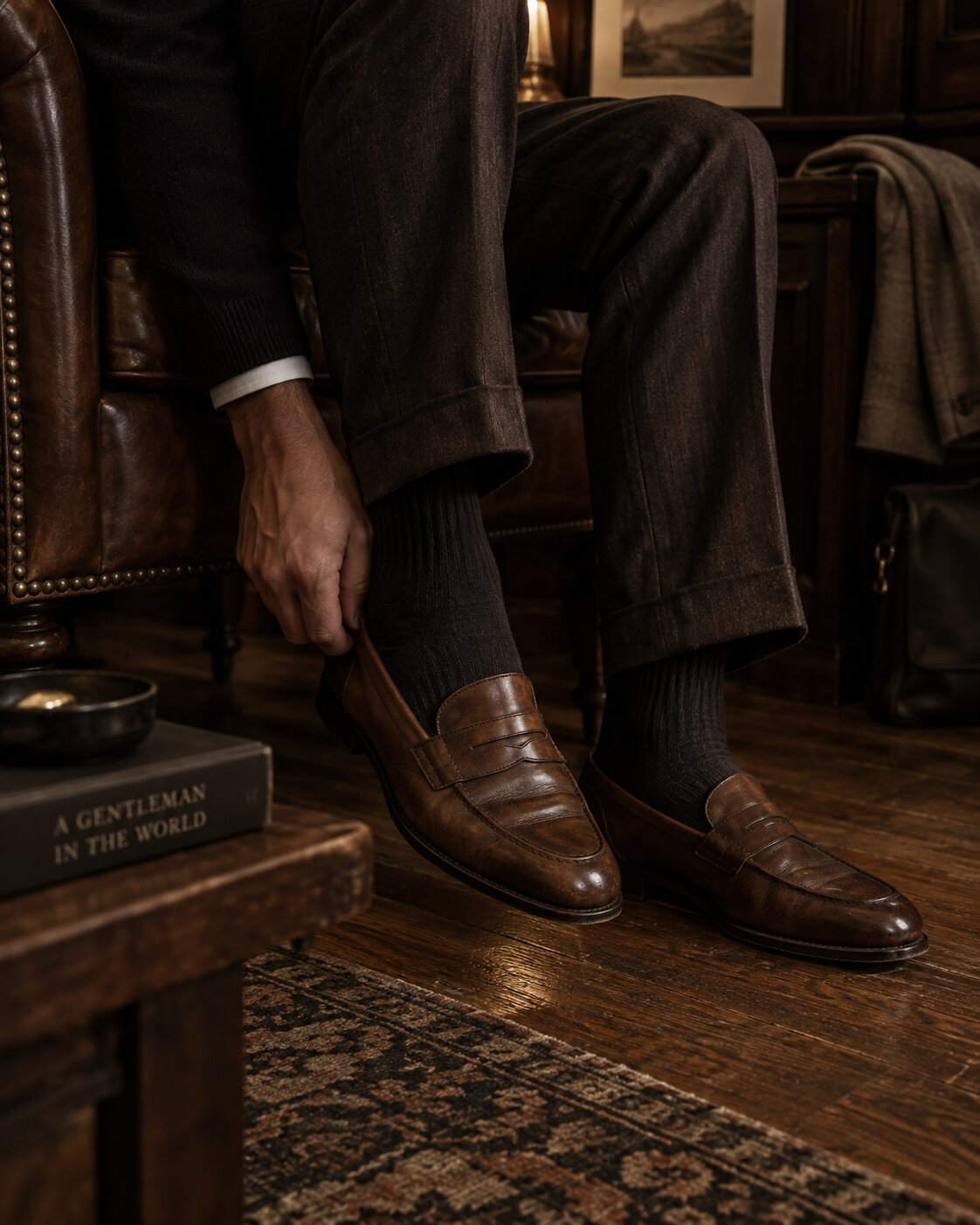
The break is how the pant leg meets the shoe.

A clean break usually works best for most men:

  • No break for a sharper, cleaner line.
  • Slight break for everyday balance.
  • Full break only when the overall style supports it.

Pants that pool heavily at the shoe usually look sloppy unless the silhouette is intentional.

Taper

The leg should narrow in a way that matches the body and shoe.

Too much taper can make the foot look large and the leg look squeezed. Too little taper can make the pants look shapeless. A straight or slightly tapered leg works well for most men.

Quick pants fit check

Pants fit well when:

  • The waist stays up without heavy belt tension.
  • The seat does not sag or pull.
  • The thigh allows movement.
  • The rise feels comfortable sitting and standing.
  • The leg shape follows the body.
  • The hem meets the shoe cleanly.
  • The pants do not twist, cling, or pool heavily.

How Jackets and Coats Should Fit

Jackets and coats shape the body immediately.

Because they sit over other garments, they need structure and enough room to layer. A jacket that is too tight looks strained. A coat that is too large swallows the body. Both make the outfit feel unfinished.

The shoulders matter most.

Shoulders

The shoulder seam should sit where the shoulder ends.

This is difficult and expensive to fix, and often not worth altering. If the shoulders are wrong, the jacket is usually wrong.

A shoulder that is too narrow creates pulling across the upper back and chest. A shoulder that is too wide drops down the arm and makes the body look less defined.

Chest

The chest should close without strain.

On a tailored jacket, the button should fasten without pulling into an X-shape. On a coat, there should be enough room for a sweater or layer underneath without the body looking swallowed.

Sleeve length

Sleeves should end with control.

For tailored jackets, the sleeve should usually show a small amount of shirt cuff. For coats, the sleeve should cover the wrist and sit close to the hand without falling past it.

Sleeves that are too long make even a good jacket look unfinished.

Body length

Length depends on the garment.

A blazer or sport coat should usually cover the seat or land close to that point. A casual jacket can be shorter. A coat can be longer depending on its style, climate, and intended use.

The length should look deliberate with the man’s height and proportions.

Layering room

Outerwear needs room.

A coat should fit over the clothing it is meant to be worn with. If it only works over a thin T-shirt, it may not function properly as outerwear. At the same time, too much room creates bulk and weakens the shape.

Quick jacket and coat fit check

A jacket or coat fits well when:

  • The shoulders sit cleanly.
  • The chest closes without pulling.
  • The sleeves end with control.
  • The body length suits the garment.
  • There is enough room for intended layers.
  • The garment gives shape without swallowing the frame.

What Too Tight Looks Like

Too tight is not the same as fitted.

Fitted clothing follows the body. Tight clothing fights it. It pulls, strains, puckers, and restricts movement. It makes a man look uncomfortable even before he feels uncomfortable.

A garment is too tight when the body has to negotiate with it.

Signs clothing is too tight

Look for:

  • Pulling across the chest
  • Buttons straining or gaping
  • Fabric lines radiating from stress points
  • Pockets flaring open
  • Waistbands digging in
  • Sleeves pulling when reaching
  • Pants clinging at the thigh or calf
  • Jacket buttons forming an X-shape
  • Shirts riding up with small movement
  • Restricted sitting, walking, or bending

Too tight clothing often looks like effort.

It can make even strong clothing feel insecure or forced.

The problem with sizing down

Many men size down because they think slimmer means better.

It does not always. Slim clothing only works when it still allows the garment to hang correctly. If the fabric is under tension, the fit is not clean.

A man should look shaped.

Not squeezed.

What Too Loose Looks Like

Too loose is not the same as relaxed.

Relaxed clothing has shape and intention. Loose clothing without control creates excess fabric, dropped lines, and a body that looks hidden rather than dressed.

A garment is too loose when the fabric controls the body instead of framing it.

Signs clothing is too loose

Look for:

  • Shoulder seams falling too far down the arm
  • Sleeves covering the hand
  • Shirts billowing at the waist
  • Excess fabric under the seat
  • Pants pooling heavily at the shoe
  • Jackets swallowing the frame
  • Collars sitting away from the neck
  • Armholes hanging too low
  • Trousers needing a tight belt to stay up
  • Clothing that shifts constantly during movement

Loose clothing can work when the silhouette is deliberate.

But accidental looseness usually looks neglected.

The problem with hiding the body

Some men wear larger clothing to hide their shape.

This often has the opposite effect. Excess fabric adds bulk and removes structure. Better fit does not mean exposing the body. It means giving the body a cleaner line.

A man should not disappear inside his clothes.

What a Tailor Can Fix

Tailoring can improve a garment.

It cannot save every garment. But small adjustments often make ordinary clothing look more considered. A man should know which issues are worth taking to a tailor and which are better solved by buying a better size or cut.

Tailoring works best when the garment is already close.

Common tailoring fixes

A tailor can often adjust:

  • Pant hems
  • Sleeve length
  • Shirt waist suppression
  • Jacket waist suppression
  • Trouser waist, within reason
  • Trouser taper
  • Shirt sleeve length, depending on construction
  • Jacket sleeve length, depending on buttons and construction
  • Minor seat adjustments

The most common and useful alteration is hemming trousers.

A proper hem can make jeans, chinos, and wool trousers look cleaner immediately.

When tailoring is worth it

Tailoring makes sense when:

  • The garment is good quality.
  • The issue is minor.
  • The shoulders or rise are already correct.
  • The fabric is worth keeping.
  • The alteration cost makes sense.
  • The piece fills a real role in the wardrobe.

Do not tailor everything.

Tailor what deserves to stay.

What a Tailor Usually Cannot Fix

A tailor is not a solution for every bad purchase.

Some fit problems are built into the garment. If the cut, proportions, or construction are wrong, tailoring may cost too much or create new problems.

A man should know when to walk away.

Problems that are hard to fix

A tailor usually cannot easily fix:

  • Bad jacket shoulders
  • A shirt that is too tight in the chest
  • Pants with the wrong rise
  • A jacket that is too short
  • A coat that is too small for layering
  • Armholes that are too low
  • Extremely oversized garments
  • Very cheap construction
  • Poor fabric that does not hang well
  • Shoes that do not fit properly

Some issues can technically be altered, but the cost or result is not worth it.

Buy closer from the start

The better standard is to buy garments that are close to correct before tailoring.

Fit should not depend on major reconstruction. It should need refinement at most.

A good purchase begins in the fitting room, not at the tailor.

Fit Should Work in Motion

Fit has to work in real life.

A man does not stand still all day. He sits, walks, reaches, bends, drives, lifts, turns, and layers clothing. A garment that looks good only in one posture is not truly fitted.

Movement reveals the truth.

Test clothes before keeping them

Before buying or deciding to keep something, test it:

  • Sit down.
  • Raise the arms.
  • Reach forward.
  • Walk a few steps.
  • Bend slightly.
  • Button and unbutton it.
  • Put hands in pockets.
  • Try it with the shoes it will be worn with.
  • Try outerwear over the layers it will actually cover.

If the garment fails during normal movement, it does not fit the life.

Comfort matters

Comfort does not mean sloppy.

It means the garment allows the body to function. A man should not be adjusting his clothes constantly. He should not be pulling at hems, fixing collars, shifting waistbands, or fighting sleeves all day.

Good fit gives control and ease at the same time.

When the Garment Is the Problem, Not the Body

A bad fit does not mean the body is wrong.

It often means the garment is wrong. Many clothes are cut for narrow assumptions about proportion. One man may have broader shoulders, stronger thighs, a shorter torso, longer arms, a fuller chest, or a different rise need.

That is normal.

The work is finding the cut that serves the body.

Do not force the wrong cut

If a garment consistently pulls, gaps, twists, or collapses, the answer may not be another size.

It may be a different cut, brand, fabric, or silhouette.

A man should pay attention to patterns:

  • Shirts always pull at the chest.
  • Pants always feel tight at the thigh.
  • Jackets always fail at the shoulder.
  • T-shirts are always too long.
  • Trousers always need a different rise.

These patterns show what the body needs from clothing.

The garment should serve the man.

Not the other way around.

A Simple Fit Checklist

Fit becomes easier when the checks are clear.

Before keeping or buying a garment, look at the major points. If too many fail, the piece does not belong in the wardrobe.

Check these first

For any garment, ask:

  • Do the shoulders sit correctly?
  • Does the chest pull?
  • Does the waist have shape without strain?
  • Can I sit comfortably?
  • Can I reach without the garment fighting me?
  • Does the length look intentional?
  • Is there too much extra fabric?
  • Does the fabric hang cleanly?
  • Does it work with the shoes or layers I would actually wear?
  • Would tailoring solve the issue, or is the garment wrong?

The more clearly a man can answer these questions, the fewer bad pieces he will buy.

THE STANDARD

Dress begins with fit.

Not more clothes.
Better judgment.

Cleaner lines.
Proper movement.

A man should know how his clothes are meant to sit.

Read the Code →

From The Journal

May 26, 2026

How Clothes Should Fit a Man

Blog detail image

Fit Comes Before Style

Fit matters before brand, price, trend, or quantity.

A man can own the right pieces and still look poorly dressed if those pieces do not sit correctly on the body. A T-shirt can pull across the chest. Jeans can sag at the seat. A jacket can collapse at the shoulder. A coat can swallow the frame.

These are not small details.

They decide how the clothing reads.

Fit gives clothing shape. It makes simple garments look intentional. It allows the body to move without looking restricted or hidden. It helps a man look composed before any styling choice is made.

A good fit should do three things

Clothes should:

  • Follow the body without clinging.
  • Allow movement without pulling.
  • Create shape without excess fabric.

The goal is not tight clothing.

The goal is control.

A well-fitted garment should look natural when standing, sitting, walking, and reaching. If it only looks good when a man stands still in front of a mirror, it does not fit well enough.

How a T-Shirt Should Fit

A T-shirt is simple, which makes fit more important.

There is nowhere for a bad fit to hide. If the shoulders are wrong, the sleeves flare, the body clings, or the length is off, the shirt looks careless quickly.

A good T-shirt should frame the upper body without squeezing it.

Shoulders

The shoulder seam should sit close to where the shoulder naturally ends.

If the seam sits too high, the shirt is likely too small. If it drops far down the arm, the shirt is either too large or intentionally oversized. Oversized can work, but it has to be deliberate and supported by the rest of the outfit.

For a standard fit, the shoulder should look clean.

Chest and body

The fabric should skim the chest and torso.

It should not pull across the chest, cling to the stomach, or twist around the body. It should also not hang like a box with no shape.

A good T-shirt has enough room to move, but not so much fabric that it hides the frame entirely.

Sleeves

Sleeves should usually hit around the middle of the upper arm.

They should follow the arm without squeezing. If the sleeve flares outward, the shirt may be too large or poorly cut. If it grips the arm tightly and pulls, it is too small.

Length

The shirt should usually end around the mid-fly area.

Too short, and it rises every time the arms move. Too long, and it starts to look sloppy when untucked. The length should feel intentional with jeans, chinos, or casual trousers.

Quick T-shirt fit check

A T-shirt fits well when:

  • The shoulder seam sits cleanly.
  • The collar lies flat.
  • The chest does not pull.
  • The torso does not cling.
  • The sleeves do not flare or squeeze.
  • The hem falls at a useful length.
  • The fabric hangs evenly after washing.

How a Button-Down Shirt Should Fit

A button-down shirt has more points of failure.

Collar, shoulders, chest, sleeves, cuffs, and length all matter. A shirt can look right in one area and wrong in another. That is why fit should be checked section by section.

A good shirt should feel clean, not restrictive.

Collar

The collar should sit close to the neck without choking it.

When buttoned, there should usually be enough room for one or two fingers between the collar and the neck. If the collar gaps badly, it may be too large. If it presses tightly, it is too small.

Even if the top button is usually worn open, the collar should still sit properly.

Shoulders

The shoulder seam should land where the shoulder ends.

This is one of the most important areas because it is difficult to fix. If the shoulder is too narrow, the shirt pulls across the upper body. If it is too wide, the shirt looks dropped and sloppy.

Chest and torso

The shirt should button cleanly.

There should be no pulling, gaping, or strain between buttons. The fabric should skim the torso with enough room to sit, reach, and move. Too much fabric at the waist can be tailored, but severe pulling at the chest usually means the shirt is too small.

Sleeves and cuffs

Sleeves should allow the arm to bend without pulling sharply.

The cuff should end around the wrist bone. It should not fall over the hand. It should not sit halfway up the forearm when the arms are relaxed.

The cuff should be close enough to stay controlled, but not so tight that it cannot move over a watch if one is worn.

Length

Length depends on how the shirt is meant to be worn.

A shirt meant to be tucked should be long enough to stay tucked when sitting and moving. A shirt meant to be worn untucked should usually end around the lower hip or mid-fly area.

If an untucked shirt covers too much of the body, it can shorten the legs visually and make the outfit feel heavy.

Quick button-down fit check

A button-down fits well when:

  • The collar sits close without choking.
  • The shoulder seam lands correctly.
  • Buttons do not pull.
  • The torso has shape without strain.
  • Sleeves reach the wrist bone.
  • Cuffs feel controlled.
  • The length matches how the shirt will be worn.

How Pants and Jeans Should Fit

Pants decide proportion.

A shirt may be noticed first, but pants shape the line of the body. Poorly fitting jeans or trousers can make the entire outfit look careless, even when everything else is strong.

The right fit should feel secure, clean, and easy to move in.

Waist

Pants should sit at the waist without needing a belt to hold them up.

A belt can finish the outfit, but it should not be the only thing keeping the pants in place. If the waistband collapses or bunches when belted, the pants are too large. If the waistband digs into the body, they are too small.

Seat

The seat should have enough room to sit comfortably without sagging.

Too tight, and the fabric pulls across the hips and backside. Too loose, and the pants hang with extra fabric under the seat. Both weaken the shape.

Thigh

The thigh should allow movement.

Fabric should not cling when standing or strain when sitting. There should be enough room to walk, sit, and bend without pulling. This is especially important for men with larger thighs, where many slim cuts fail.

Rise

Rise is the distance from the crotch seam to the waistband.

A rise that is too low can make pants feel tight when sitting and shorten the body awkwardly. A rise that is too high without the right cut can feel uncomfortable or look dated. The right rise depends on the body and style, but it should feel natural and support the proportions.

Break

The break is how the pant leg meets the shoe.

A clean break usually works best for most men:

  • No break for a sharper, cleaner line.
  • Slight break for everyday balance.
  • Full break only when the overall style supports it.

Pants that pool heavily at the shoe usually look sloppy unless the silhouette is intentional.

Taper

The leg should narrow in a way that matches the body and shoe.

Too much taper can make the foot look large and the leg look squeezed. Too little taper can make the pants look shapeless. A straight or slightly tapered leg works well for most men.

Quick pants fit check

Pants fit well when:

  • The waist stays up without heavy belt tension.
  • The seat does not sag or pull.
  • The thigh allows movement.
  • The rise feels comfortable sitting and standing.
  • The leg shape follows the body.
  • The hem meets the shoe cleanly.
  • The pants do not twist, cling, or pool heavily.

How Jackets and Coats Should Fit

Jackets and coats shape the body immediately.

Because they sit over other garments, they need structure and enough room to layer. A jacket that is too tight looks strained. A coat that is too large swallows the body. Both make the outfit feel unfinished.

The shoulders matter most.

Shoulders

The shoulder seam should sit where the shoulder ends.

This is difficult and expensive to fix, and often not worth altering. If the shoulders are wrong, the jacket is usually wrong.

A shoulder that is too narrow creates pulling across the upper back and chest. A shoulder that is too wide drops down the arm and makes the body look less defined.

Chest

The chest should close without strain.

On a tailored jacket, the button should fasten without pulling into an X-shape. On a coat, there should be enough room for a sweater or layer underneath without the body looking swallowed.

Sleeve length

Sleeves should end with control.

For tailored jackets, the sleeve should usually show a small amount of shirt cuff. For coats, the sleeve should cover the wrist and sit close to the hand without falling past it.

Sleeves that are too long make even a good jacket look unfinished.

Body length

Length depends on the garment.

A blazer or sport coat should usually cover the seat or land close to that point. A casual jacket can be shorter. A coat can be longer depending on its style, climate, and intended use.

The length should look deliberate with the man’s height and proportions.

Layering room

Outerwear needs room.

A coat should fit over the clothing it is meant to be worn with. If it only works over a thin T-shirt, it may not function properly as outerwear. At the same time, too much room creates bulk and weakens the shape.

Quick jacket and coat fit check

A jacket or coat fits well when:

  • The shoulders sit cleanly.
  • The chest closes without pulling.
  • The sleeves end with control.
  • The body length suits the garment.
  • There is enough room for intended layers.
  • The garment gives shape without swallowing the frame.

What Too Tight Looks Like

Too tight is not the same as fitted.

Fitted clothing follows the body. Tight clothing fights it. It pulls, strains, puckers, and restricts movement. It makes a man look uncomfortable even before he feels uncomfortable.

A garment is too tight when the body has to negotiate with it.

Signs clothing is too tight

Look for:

  • Pulling across the chest
  • Buttons straining or gaping
  • Fabric lines radiating from stress points
  • Pockets flaring open
  • Waistbands digging in
  • Sleeves pulling when reaching
  • Pants clinging at the thigh or calf
  • Jacket buttons forming an X-shape
  • Shirts riding up with small movement
  • Restricted sitting, walking, or bending

Too tight clothing often looks like effort.

It can make even strong clothing feel insecure or forced.

The problem with sizing down

Many men size down because they think slimmer means better.

It does not always. Slim clothing only works when it still allows the garment to hang correctly. If the fabric is under tension, the fit is not clean.

A man should look shaped.

Not squeezed.

What Too Loose Looks Like

Too loose is not the same as relaxed.

Relaxed clothing has shape and intention. Loose clothing without control creates excess fabric, dropped lines, and a body that looks hidden rather than dressed.

A garment is too loose when the fabric controls the body instead of framing it.

Signs clothing is too loose

Look for:

  • Shoulder seams falling too far down the arm
  • Sleeves covering the hand
  • Shirts billowing at the waist
  • Excess fabric under the seat
  • Pants pooling heavily at the shoe
  • Jackets swallowing the frame
  • Collars sitting away from the neck
  • Armholes hanging too low
  • Trousers needing a tight belt to stay up
  • Clothing that shifts constantly during movement

Loose clothing can work when the silhouette is deliberate.

But accidental looseness usually looks neglected.

The problem with hiding the body

Some men wear larger clothing to hide their shape.

This often has the opposite effect. Excess fabric adds bulk and removes structure. Better fit does not mean exposing the body. It means giving the body a cleaner line.

A man should not disappear inside his clothes.

What a Tailor Can Fix

Tailoring can improve a garment.

It cannot save every garment. But small adjustments often make ordinary clothing look more considered. A man should know which issues are worth taking to a tailor and which are better solved by buying a better size or cut.

Tailoring works best when the garment is already close.

Common tailoring fixes

A tailor can often adjust:

  • Pant hems
  • Sleeve length
  • Shirt waist suppression
  • Jacket waist suppression
  • Trouser waist, within reason
  • Trouser taper
  • Shirt sleeve length, depending on construction
  • Jacket sleeve length, depending on buttons and construction
  • Minor seat adjustments

The most common and useful alteration is hemming trousers.

A proper hem can make jeans, chinos, and wool trousers look cleaner immediately.

When tailoring is worth it

Tailoring makes sense when:

  • The garment is good quality.
  • The issue is minor.
  • The shoulders or rise are already correct.
  • The fabric is worth keeping.
  • The alteration cost makes sense.
  • The piece fills a real role in the wardrobe.

Do not tailor everything.

Tailor what deserves to stay.

What a Tailor Usually Cannot Fix

A tailor is not a solution for every bad purchase.

Some fit problems are built into the garment. If the cut, proportions, or construction are wrong, tailoring may cost too much or create new problems.

A man should know when to walk away.

Problems that are hard to fix

A tailor usually cannot easily fix:

  • Bad jacket shoulders
  • A shirt that is too tight in the chest
  • Pants with the wrong rise
  • A jacket that is too short
  • A coat that is too small for layering
  • Armholes that are too low
  • Extremely oversized garments
  • Very cheap construction
  • Poor fabric that does not hang well
  • Shoes that do not fit properly

Some issues can technically be altered, but the cost or result is not worth it.

Buy closer from the start

The better standard is to buy garments that are close to correct before tailoring.

Fit should not depend on major reconstruction. It should need refinement at most.

A good purchase begins in the fitting room, not at the tailor.

Fit Should Work in Motion

Fit has to work in real life.

A man does not stand still all day. He sits, walks, reaches, bends, drives, lifts, turns, and layers clothing. A garment that looks good only in one posture is not truly fitted.

Movement reveals the truth.

Test clothes before keeping them

Before buying or deciding to keep something, test it:

  • Sit down.
  • Raise the arms.
  • Reach forward.
  • Walk a few steps.
  • Bend slightly.
  • Button and unbutton it.
  • Put hands in pockets.
  • Try it with the shoes it will be worn with.
  • Try outerwear over the layers it will actually cover.

If the garment fails during normal movement, it does not fit the life.

Comfort matters

Comfort does not mean sloppy.

It means the garment allows the body to function. A man should not be adjusting his clothes constantly. He should not be pulling at hems, fixing collars, shifting waistbands, or fighting sleeves all day.

Good fit gives control and ease at the same time.

When the Garment Is the Problem, Not the Body

A bad fit does not mean the body is wrong.

It often means the garment is wrong. Many clothes are cut for narrow assumptions about proportion. One man may have broader shoulders, stronger thighs, a shorter torso, longer arms, a fuller chest, or a different rise need.

That is normal.

The work is finding the cut that serves the body.

Do not force the wrong cut

If a garment consistently pulls, gaps, twists, or collapses, the answer may not be another size.

It may be a different cut, brand, fabric, or silhouette.

A man should pay attention to patterns:

  • Shirts always pull at the chest.
  • Pants always feel tight at the thigh.
  • Jackets always fail at the shoulder.
  • T-shirts are always too long.
  • Trousers always need a different rise.

These patterns show what the body needs from clothing.

The garment should serve the man.

Not the other way around.

A Simple Fit Checklist

Fit becomes easier when the checks are clear.

Before keeping or buying a garment, look at the major points. If too many fail, the piece does not belong in the wardrobe.

Check these first

For any garment, ask:

  • Do the shoulders sit correctly?
  • Does the chest pull?
  • Does the waist have shape without strain?
  • Can I sit comfortably?
  • Can I reach without the garment fighting me?
  • Does the length look intentional?
  • Is there too much extra fabric?
  • Does the fabric hang cleanly?
  • Does it work with the shoes or layers I would actually wear?
  • Would tailoring solve the issue, or is the garment wrong?

The more clearly a man can answer these questions, the fewer bad pieces he will buy.