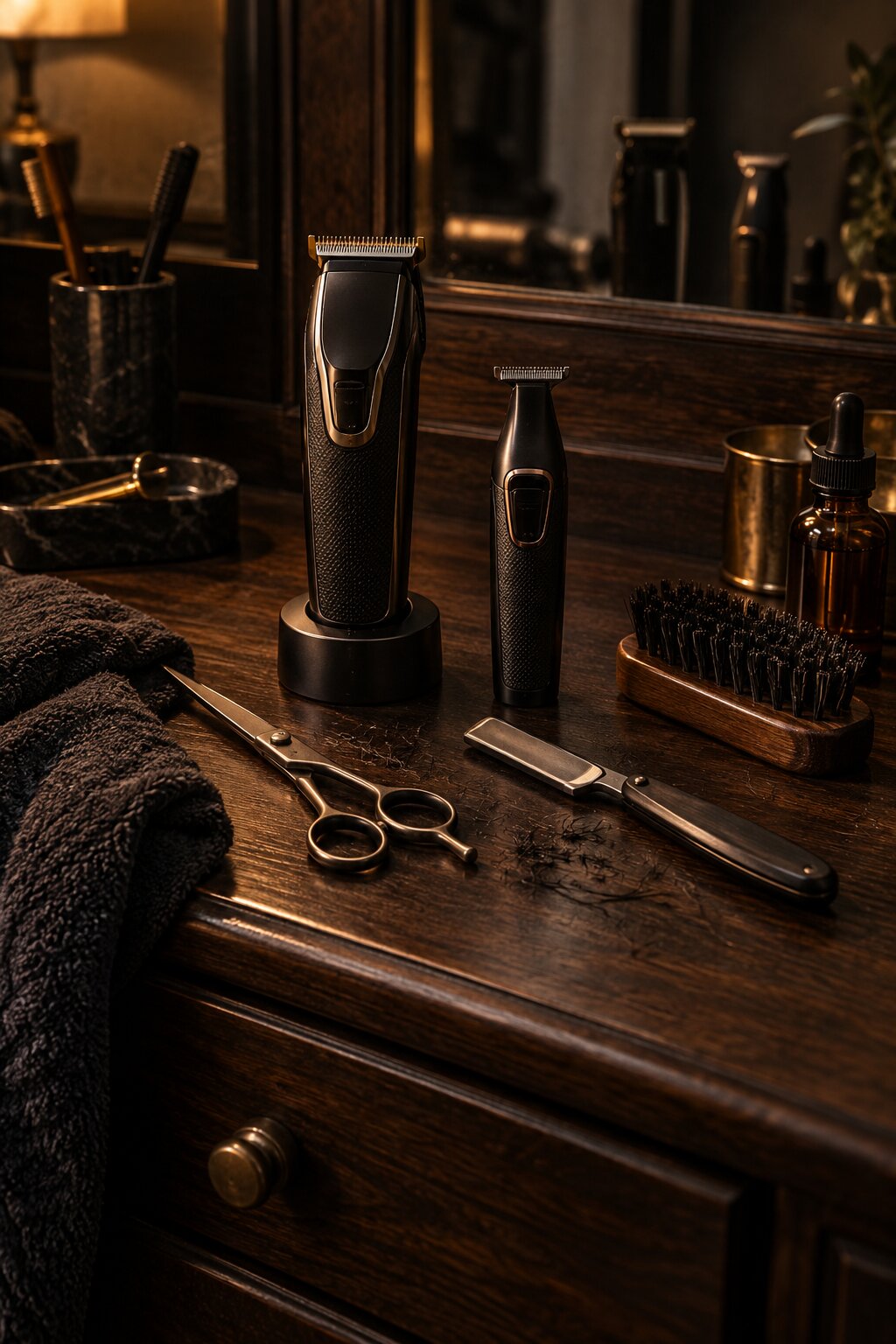
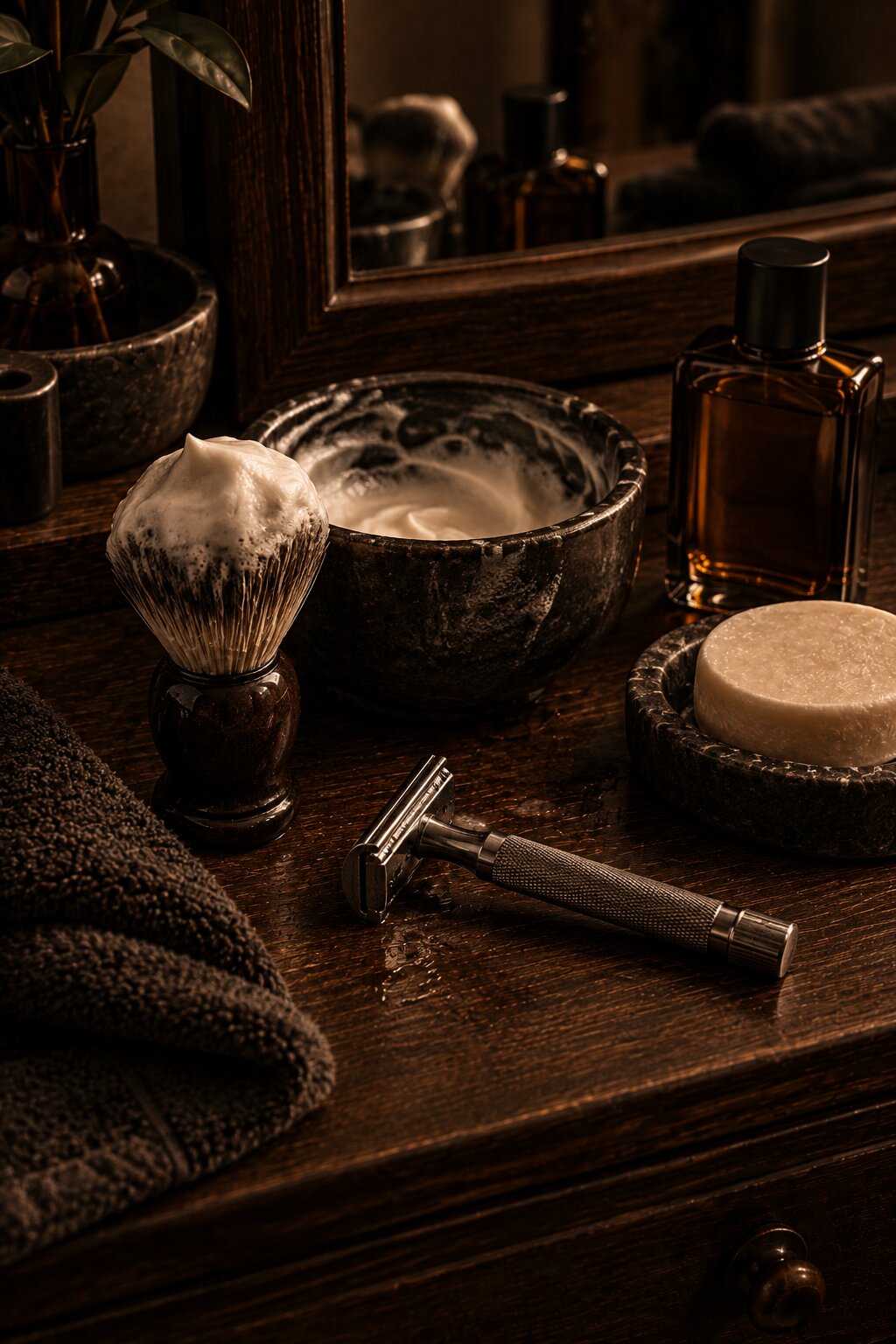
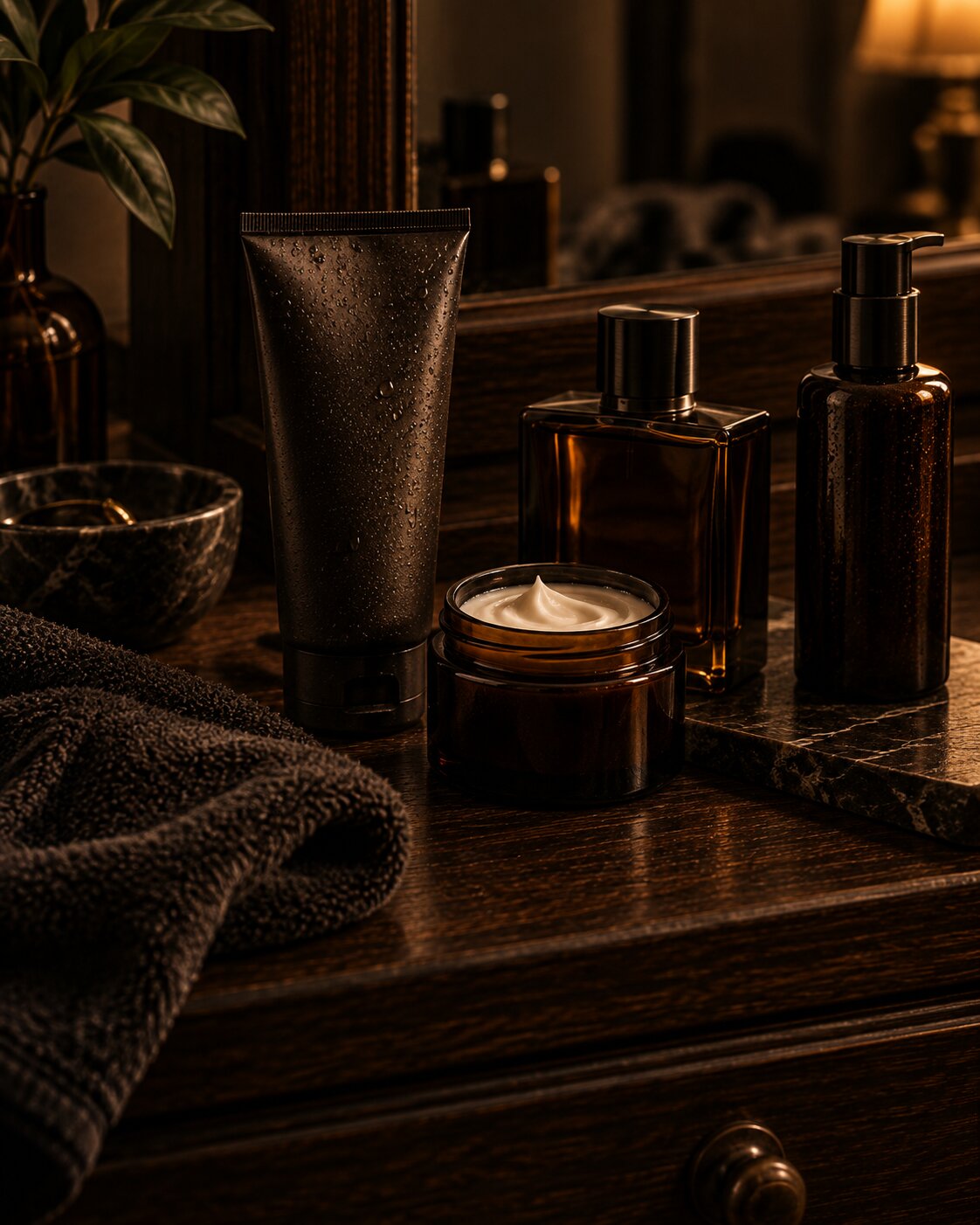
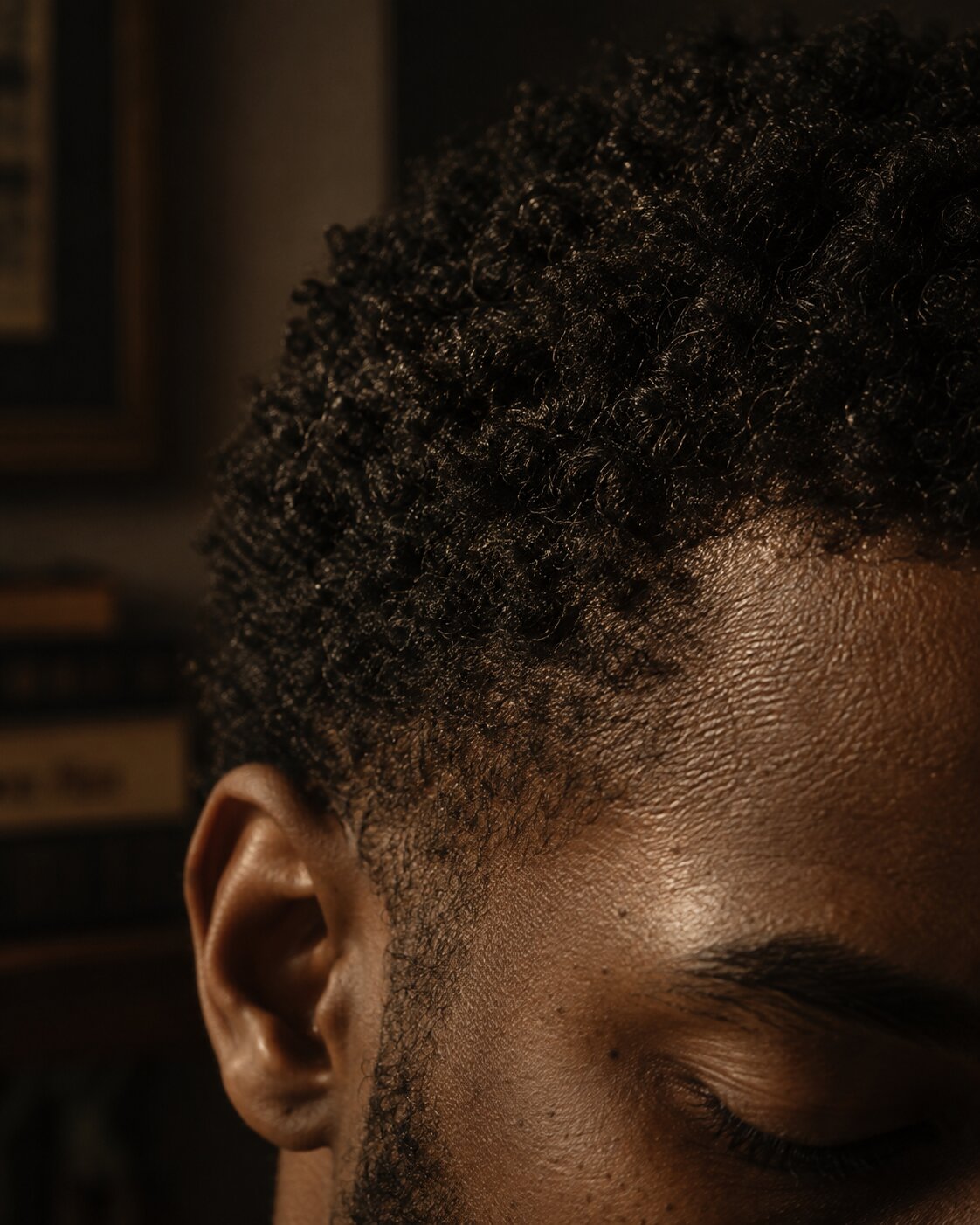
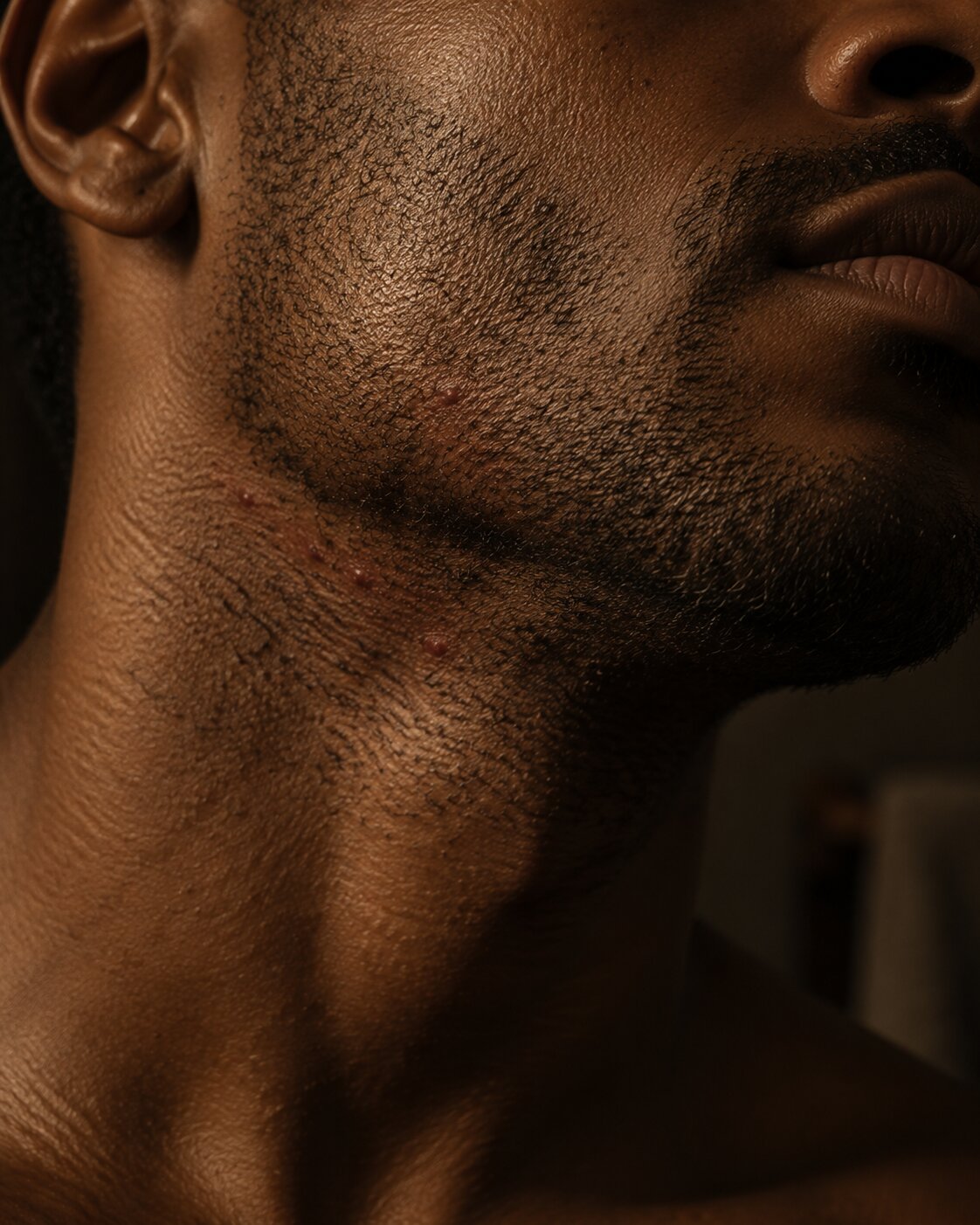
Hair care is maintenance
practiced consistently.
Cleanse properly.
Moisturize often.
Protect the hair.
Keep the shape maintained.
A man should know how
to care for what he grows.
Many men are never taught how to care for their hair.
Keeping it short can hide that gap for a while. Growing it out makes the standard clearer. The hair needs cleansing, moisture, protection, and regular maintenance. Without that, it becomes dry, tangled, brittle, or difficult to manage.
Black men’s hair care does not need to be complicated.
It needs to be consistent.
The goal is not a shelf full of products. The goal is a routine that can be repeated and adjusted as the hair grows.
A simple routine should include:
That is enough to begin.
A man can add more later if the hair requires it. But the foundation should be simple enough to keep.
Clean hair matters.
But washing too often, using harsh shampoo, or stripping the hair can leave textured hair dry and brittle. Black hair often needs moisture preserved, not removed aggressively.
The goal is a clean scalp and hair that still feels balanced.
There is no single schedule for every man.
A practical starting point is once a week or every one to two weeks, depending on sweat, product buildup, scalp condition, hairstyle, and lifestyle.
A man may need to wash more often if he:
He may need to wash less often if his hair becomes dry quickly after shampooing.
The scalp should feel clean.
The hair should not feel stripped.
Look for a gentle shampoo that cleans without leaving the hair hard, squeaky, or rough.
Many men do better with:
A clarifying shampoo can be useful, but not every wash needs to be aggressive. Use stronger cleansing when the hair is heavy with product, not as the default.
The routine may be too stripping if the hair feels:
Clean hair should not feel punished.
Conditioner is not optional.
For textured hair, conditioning is basic maintenance. Shampoo cleans the hair. Conditioner helps soften it, reduce friction, improve manageability, and make detangling easier.
A man should condition every time he washes.
Conditioner helps:
This matters especially when growing hair out.
Longer hair gives more room for tangles, dryness, and breakage. Conditioner helps make the hair easier to work with before it becomes a problem.
Keep it simple:
Do not rush through this step.
Conditioning is where much of the routine begins to work.
Textured hair needs regular moisture.
Waiting until the hair feels dry, stiff, or brittle means the routine is already behind. Moisture should be maintained before the hair starts to feel neglected.
Water is the base of moisture.
Products help hold it there.
A simple moisture routine may include:
The right choice depends on hair length, density, texture, and how the hair responds.
For short hair, a light leave-in may be enough. For longer or denser hair, a cream may work better.
Start by checking the hair every few days.
Moisturize when it feels:
Some men need moisture daily. Some need it every few days. Some need less if they use heavier products or protective styles.
The hair should guide the frequency.
Oil is not moisture.
Oil can help seal or soften the hair, but it does not hydrate by itself. If the hair is dry and only oil is applied, the hair may stay dry underneath.
Moisture usually begins with water or a water-based product.
Oil comes after, if needed.
Sealing means helping moisture stay in the hair longer.
After applying a water-based moisturizer or leave-in conditioner, some men use a small amount of oil or butter to reduce moisture loss. This can help textured hair feel softer for longer.
The point is not to coat the hair heavily.
The point is control.
Common options include:
Not every oil works for every man.
Some oils feel too heavy. Some sit on top of the hair. Some cause buildup. Use less than expected and adjust slowly.
A simple order:
The hair should feel softer and more manageable.
It should not feel greasy, coated, or weighed down.
Night protection matters.
Cotton pillowcases can pull moisture from the hair and create friction while sleeping. That friction can lead to dryness, tangles, frizz, and breakage over time.
A man growing his hair out should protect it while he sleeps.
Use one of the following:
The best option is the one that stays on and fits the hairstyle.
A durag may work well for waves or shorter styles. A bonnet may work better for longer natural hair, twists, coils, or styles that need more room. A satin pillowcase is useful as backup, especially if headwear comes off during sleep.
Night protection helps reduce:
This is one of the simplest ways to support hair growth.
Hair grows from the scalp, but length is kept by preventing breakage.
Heat can help style or stretch the hair.
It can also cause dryness, breakage, and damage when used too often or too aggressively. Daily blow-drying, high heat, and no heat protectant can weaken the hair over time.
A man trying to grow his hair should treat heat with restraint.
Blow-drying can be useful when:
But it should be done carefully.
Use:
Do not blast the hair with high heat every day.
That is not maintenance.
That is wear.
Air drying can work, but it should still be controlled.
Do not leave hair dripping and tangled. Gently remove excess water with a towel or T-shirt, apply product, shape the hair, and let it dry without rough handling.
A microfiber towel or soft cotton T-shirt is often gentler than a rough bath towel.
It helps to know the hair.
But a man does not need to turn hair care into a technical manual before he can begin. Terms like 4C hair, low porosity, density, shrinkage, and curl pattern can be useful, but they should not make the routine harder than it needs to be.
The main question is simple:
How does the hair respond?
4C hair and tightly coiled textures often need careful moisture, gentle handling, and protection.
This hair can shrink significantly, tangle easily, and feel dry if neglected. It may look strong, but it can break when handled roughly.
A steady routine matters:
The hair should not be fought into submission.
It should be maintained.
Low-porosity hair can resist moisture because the hair cuticle is tighter.
Products may sit on top instead of absorbing. The hair may take longer to get wet and longer to dry. Heavy oils and butters may create buildup if used too often.
If low porosity seems likely, try:
The goal is not to label the hair and build a complicated routine around it.
The goal is to notice what works.
Buildup can make hair feel dry even when products are being used.
Signs include:
When this happens, a clearer wash may be needed.
Then return to a simpler routine.
Growing hair is not only about growth.
It is about retention. Hair may be growing, but if the ends keep breaking, the length will not show. That is why moisture, protection, and gentle handling matter.
A man growing his hair out needs patience and a routine he can keep.
Focus on:
The hair does not need to be touched all day.
Constant manipulation can lead to breakage.
Detangling should be gentle.
Use fingers, a wide-tooth comb, or a proper brush depending on the hair and style. Detangle when the hair has slip from conditioner or leave-in. Do not rip through dry, tangled hair.
Start from the ends and work upward.
Slow is better than broken.
A good routine does not need many products.
The basics matter more than the size of the shelf. A man should own what he uses and understand why it is there.
Start with:
That is the foundation.
Anything beyond that should solve a specific problem.
Be careful with:
More product does not mean better care.
A simple routine used consistently will usually do more than a crowded one used poorly.
Growing hair out does not mean avoiding the barber.
It means using the barber differently. The goal is to keep the shape controlled while allowing length to develop. Without maintenance, the hair can lose shape, split unevenly, or look neglected before it reaches the desired length.
A barber helps preserve order.
When growing hair out, ask for:
Do not let the barber cut away progress because the goal was unclear.
Tell him what is being grown, what should stay, and what should only be cleaned up.
The schedule depends on the style.
Some men may need shape-ups every two to three weeks. Others may go every four to six weeks. Men growing longer natural hair may need less frequent cutting but still need periodic shaping and maintenance.
The point is not constant cutting.
The point is controlled growth.
A routine should be easy to repeat.
This is a starting structure. It can be adjusted based on hair length, scalp condition, workouts, climate, and style.
The routine should keep the hair clean, soft, shaped, and protected.
That is enough.

Many men are never taught how to care for their hair.
Keeping it short can hide that gap for a while. Growing it out makes the standard clearer. The hair needs cleansing, moisture, protection, and regular maintenance. Without that, it becomes dry, tangled, brittle, or difficult to manage.
Black men’s hair care does not need to be complicated.
It needs to be consistent.
The goal is not a shelf full of products. The goal is a routine that can be repeated and adjusted as the hair grows.
A simple routine should include:
That is enough to begin.
A man can add more later if the hair requires it. But the foundation should be simple enough to keep.
Clean hair matters.
But washing too often, using harsh shampoo, or stripping the hair can leave textured hair dry and brittle. Black hair often needs moisture preserved, not removed aggressively.
The goal is a clean scalp and hair that still feels balanced.
There is no single schedule for every man.
A practical starting point is once a week or every one to two weeks, depending on sweat, product buildup, scalp condition, hairstyle, and lifestyle.
A man may need to wash more often if he:
He may need to wash less often if his hair becomes dry quickly after shampooing.
The scalp should feel clean.
The hair should not feel stripped.
Look for a gentle shampoo that cleans without leaving the hair hard, squeaky, or rough.
Many men do better with:
A clarifying shampoo can be useful, but not every wash needs to be aggressive. Use stronger cleansing when the hair is heavy with product, not as the default.
The routine may be too stripping if the hair feels:
Clean hair should not feel punished.
Conditioner is not optional.
For textured hair, conditioning is basic maintenance. Shampoo cleans the hair. Conditioner helps soften it, reduce friction, improve manageability, and make detangling easier.
A man should condition every time he washes.
Conditioner helps:
This matters especially when growing hair out.
Longer hair gives more room for tangles, dryness, and breakage. Conditioner helps make the hair easier to work with before it becomes a problem.
Keep it simple:
Do not rush through this step.
Conditioning is where much of the routine begins to work.
Textured hair needs regular moisture.
Waiting until the hair feels dry, stiff, or brittle means the routine is already behind. Moisture should be maintained before the hair starts to feel neglected.
Water is the base of moisture.
Products help hold it there.
A simple moisture routine may include:
The right choice depends on hair length, density, texture, and how the hair responds.
For short hair, a light leave-in may be enough. For longer or denser hair, a cream may work better.
Start by checking the hair every few days.
Moisturize when it feels:
Some men need moisture daily. Some need it every few days. Some need less if they use heavier products or protective styles.
The hair should guide the frequency.
Oil is not moisture.
Oil can help seal or soften the hair, but it does not hydrate by itself. If the hair is dry and only oil is applied, the hair may stay dry underneath.
Moisture usually begins with water or a water-based product.
Oil comes after, if needed.
Sealing means helping moisture stay in the hair longer.
After applying a water-based moisturizer or leave-in conditioner, some men use a small amount of oil or butter to reduce moisture loss. This can help textured hair feel softer for longer.
The point is not to coat the hair heavily.
The point is control.
Common options include:
Not every oil works for every man.
Some oils feel too heavy. Some sit on top of the hair. Some cause buildup. Use less than expected and adjust slowly.
A simple order:
The hair should feel softer and more manageable.
It should not feel greasy, coated, or weighed down.
Night protection matters.
Cotton pillowcases can pull moisture from the hair and create friction while sleeping. That friction can lead to dryness, tangles, frizz, and breakage over time.
A man growing his hair out should protect it while he sleeps.
Use one of the following:
The best option is the one that stays on and fits the hairstyle.
A durag may work well for waves or shorter styles. A bonnet may work better for longer natural hair, twists, coils, or styles that need more room. A satin pillowcase is useful as backup, especially if headwear comes off during sleep.
Night protection helps reduce:
This is one of the simplest ways to support hair growth.
Hair grows from the scalp, but length is kept by preventing breakage.
Heat can help style or stretch the hair.
It can also cause dryness, breakage, and damage when used too often or too aggressively. Daily blow-drying, high heat, and no heat protectant can weaken the hair over time.
A man trying to grow his hair should treat heat with restraint.
Blow-drying can be useful when:
But it should be done carefully.
Use:
Do not blast the hair with high heat every day.
That is not maintenance.
That is wear.
Air drying can work, but it should still be controlled.
Do not leave hair dripping and tangled. Gently remove excess water with a towel or T-shirt, apply product, shape the hair, and let it dry without rough handling.
A microfiber towel or soft cotton T-shirt is often gentler than a rough bath towel.
It helps to know the hair.
But a man does not need to turn hair care into a technical manual before he can begin. Terms like 4C hair, low porosity, density, shrinkage, and curl pattern can be useful, but they should not make the routine harder than it needs to be.
The main question is simple:
How does the hair respond?
4C hair and tightly coiled textures often need careful moisture, gentle handling, and protection.
This hair can shrink significantly, tangle easily, and feel dry if neglected. It may look strong, but it can break when handled roughly.
A steady routine matters:
The hair should not be fought into submission.
It should be maintained.
Low-porosity hair can resist moisture because the hair cuticle is tighter.
Products may sit on top instead of absorbing. The hair may take longer to get wet and longer to dry. Heavy oils and butters may create buildup if used too often.
If low porosity seems likely, try:
The goal is not to label the hair and build a complicated routine around it.
The goal is to notice what works.
Buildup can make hair feel dry even when products are being used.
Signs include:
When this happens, a clearer wash may be needed.
Then return to a simpler routine.
Growing hair is not only about growth.
It is about retention. Hair may be growing, but if the ends keep breaking, the length will not show. That is why moisture, protection, and gentle handling matter.
A man growing his hair out needs patience and a routine he can keep.
Focus on:
The hair does not need to be touched all day.
Constant manipulation can lead to breakage.
Detangling should be gentle.
Use fingers, a wide-tooth comb, or a proper brush depending on the hair and style. Detangle when the hair has slip from conditioner or leave-in. Do not rip through dry, tangled hair.
Start from the ends and work upward.
Slow is better than broken.
A good routine does not need many products.
The basics matter more than the size of the shelf. A man should own what he uses and understand why it is there.
Start with:
That is the foundation.
Anything beyond that should solve a specific problem.
Be careful with:
More product does not mean better care.
A simple routine used consistently will usually do more than a crowded one used poorly.
Growing hair out does not mean avoiding the barber.
It means using the barber differently. The goal is to keep the shape controlled while allowing length to develop. Without maintenance, the hair can lose shape, split unevenly, or look neglected before it reaches the desired length.
A barber helps preserve order.
When growing hair out, ask for:
Do not let the barber cut away progress because the goal was unclear.
Tell him what is being grown, what should stay, and what should only be cleaned up.
The schedule depends on the style.
Some men may need shape-ups every two to three weeks. Others may go every four to six weeks. Men growing longer natural hair may need less frequent cutting but still need periodic shaping and maintenance.
The point is not constant cutting.
The point is controlled growth.
A routine should be easy to repeat.
This is a starting structure. It can be adjusted based on hair length, scalp condition, workouts, climate, and style.
The routine should keep the hair clean, soft, shaped, and protected.
That is enough.