.jpg)
A man’s home does not need to impress.
It needs to be kept
Clean bedding.
Useful objects.
Proper tools.
Enough order to support the day.
The standard begins with what is used daily.
A home should work before it performs.
Before art, speakers, bar carts, candles, coffee table books, or decorative objects, the basic parts of daily life should be handled well. A man should be able to sleep properly, clean his space, prepare simple food, care for his clothes, manage small repairs, and keep ordinary objects in order.
That is the foundation.
Decoration can come later. Character can come later. The first standard is usefulness.
Start with the objects that support daily maintenance:
These are not exciting objects. They are necessary ones.
A well-kept home is not built from things meant to be noticed. It is built from things that make the room easier to live in and easier to maintain.
The bed is one of the first places a man should bring order.
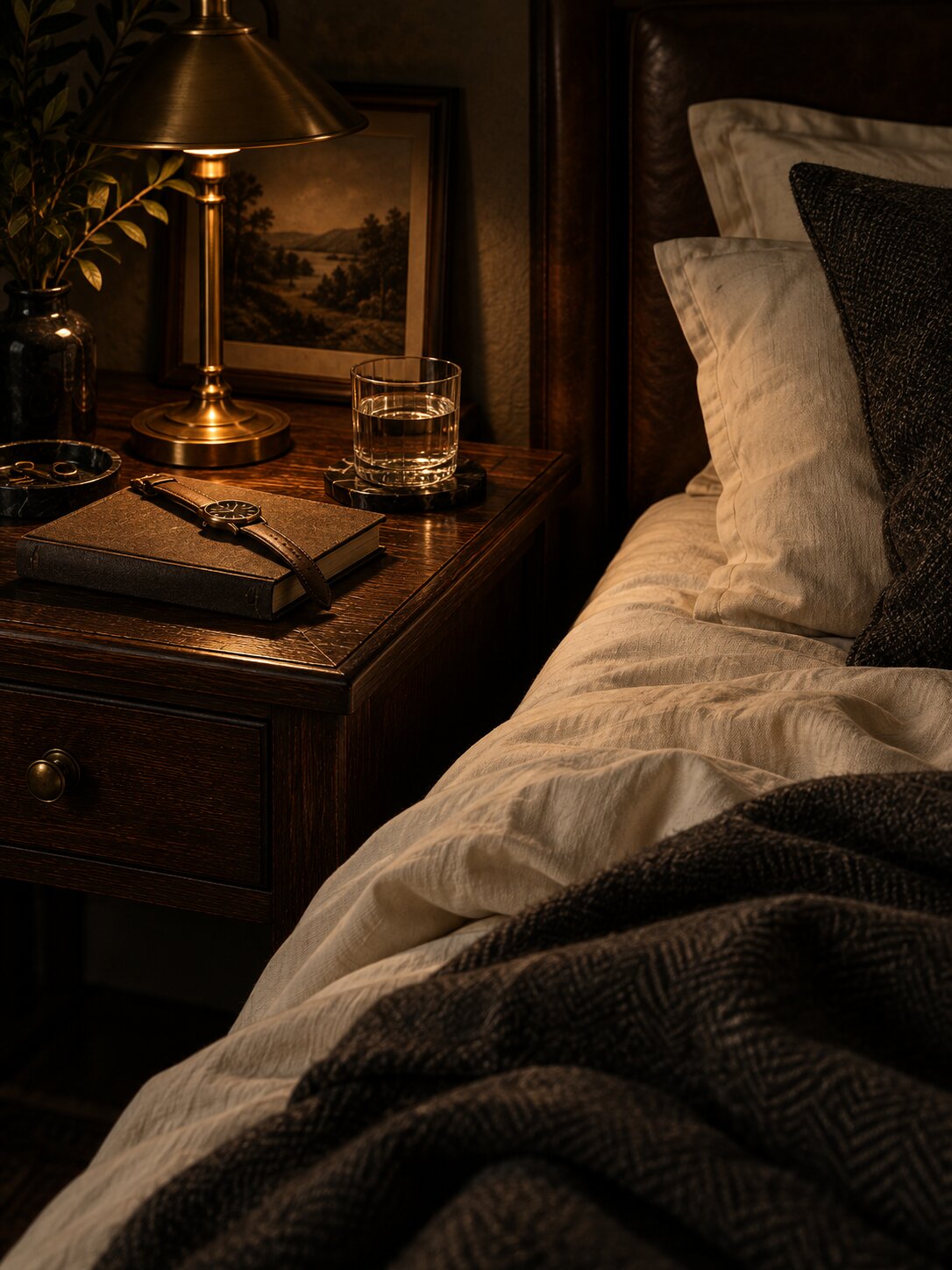
Clean bedding changes the way a room feels. It affects rest, hygiene, and the standard of the bedroom. A bare mattress, weak pillows, stained sheets, or bedding that never gets washed makes the room feel neglected no matter what else is in it.
A man does not need excessive bedding.
He needs bedding that is clean, comfortable, and cared for.
Start with:
Two sheet sets matter because one can be on the bed while the other is being washed. This removes the excuse of stripping the bed and never finishing the job.
Choose bedding with restraint:
Clean bedding is not a luxury detail.
It is basic maintenance.
A bathroom should be clean, functional, and prepared.
It should not feel like a temporary setup. It should not rely on one old towel, a wet bath mat, or products scattered around the sink.
The bathroom is where daily maintenance happens. It should support that routine.
A basic towel setup should include:
Towels should be washed regularly and replaced when they become rough, stained, thin, or permanently musty.
Every bathroom should have these:
The plunger and toilet brush are not optional. A man should not wait for a problem before owning the object that solves it.
Only daily-use items should stay visible:
Everything else should live in a drawer, cabinet, dopp kit, or storage bin.
A crowded sink makes the whole bathroom feel careless.
Laundry is part of the home standard.
A man’s clothing cannot look composed if the system around it is disorderly. Clothes on the floor, clean laundry in baskets, wrinkled shirts, missing hangers, and lint-covered coats all point to the same problem: the wardrobe is not being maintained.
The right objects make clothing care easier.
Start with:
A hamper gives dirty clothes a place. A drying rack protects pieces that should not go in the dryer. Good hangers help shirts, jackets, and trousers keep their shape.
The chair is not a laundry system.
A man should also own:
Not every garment needs special care. But the pieces that shape a man’s presentation should not be neglected.
Wrinkles, lint, stains, and worn shoes change the way clothing reads.
Care is part of dress.
A clean home requires supplies before the mess arrives.
A man should not discover he is out of trash bags when the bin is full. He should not need to buy glass cleaner only after the mirror is marked. He should not wait until the floor is visibly dirty before owning a broom, mop, or vacuum.
Cleaning is easier when the tools are already in place.
Every home should have:
These handle most daily and weekly cleaning needs.
Depending on the space, keep:
The right floor tools depend on the home. Carpet needs a vacuum. Hard floors need sweeping and mopping. Rugs need regular attention.
Cleaning does not need to become a full-day event every time.
Keep the rhythm simple:
A clean home is mostly the result of small tasks done before they become large ones.
A man does not need a professional kitchen.
He does need enough to prepare basic meals, serve food properly, store leftovers, and keep the kitchen clean. Even if he does not cook often, the kitchen should not feel helpless.
Start with the objects that make simple food possible.
A practical kitchen should include:
A good knife and cutting board matter more than a drawer full of gadgets. One sharp knife will serve better than several dull ones.
Keep enough for daily use and a few guests:
This does not need to be elaborate. It should be clean, matching enough to feel intentional, and easy to maintain.
Do not start with novelty appliances or gadgets unless they support how the man actually eats.
Usually unnecessary at the beginning:
The kitchen should serve daily life first.
Every man should be able to handle small problems at home.
A loose screw, a crooked frame, a box that needs opening, a measurement that needs taking, a battery that needs replacing, or a basic assembly task should not require panic or delay.
A small tool kit is enough to begin.
Start with:
These tools handle most basic home tasks.
Tools should have one place.
A small toolbox, drawer, or storage bin is enough. The point is to know where everything is when it is needed.
Do not scatter tools across the home. Do not leave batteries, nails, tape, and screwdrivers in random drawers.
Small problems become easier when the tools are ready.
Lighting changes the way a home feels.
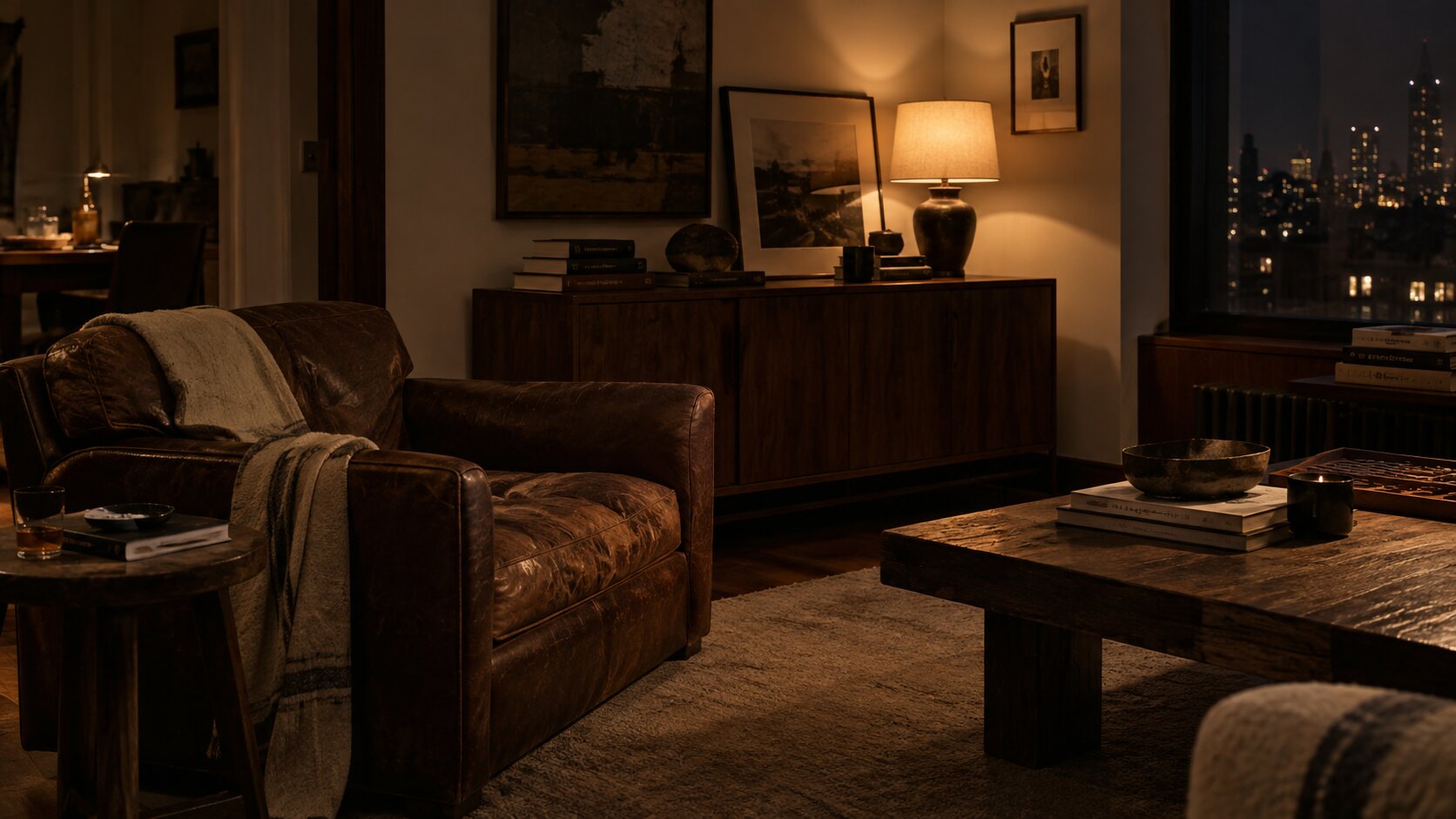
Overhead lighting alone often makes a room feel harsh, unfinished, or careless. A well-kept space usually needs softer light, warmer bulbs, and lamps placed where the room is actually used.
Lighting is not just decoration.
It supports comfort and order.
Start with:
A room should not rely on one ceiling light to do every job.
Warm bulbs usually make a home feel more settled. Bright, cold bulbs can make the room feel clinical. Dim, weak bulbs can make it feel neglected.
The goal is balance:
A lamp can make a plain room feel considered without adding clutter.
Storage gives objects a place to return.
Without storage, daily life spreads across the room. Keys land on counters. Shoes gather near the door. Mail sits on the table. Cords move from drawer to drawer. Clothes collect on chairs.
A man does not need complicated organization.
He needs clear places for ordinary things.
The entryway should have a simple system:
The entry should control what comes into the home.
Use simple objects:
Open storage works for objects used daily. Closed storage works for things that create visual clutter. Deep storage works for seasonal or rarely used items.
Counters, dressers, nightstands, desks, and coffee tables should not become holding areas for undecided objects.
A clear surface makes a room feel immediately more maintained.
Keep only what belongs there.
Move the rest.
A home should not feel empty.
Once the practical foundation is handled, a few objects can give the space weight and character. The key is restraint. Character does not require clutter.
Choose objects that feel useful, personal, or lasting.
A man might add:
These objects should not feel staged. They should belong to the life being lived.
A room with dirty floors, poor bedding, no tools, weak towels, and a cluttered sink does not need more decoration.
It needs order.
Character comes after the foundation.
A good object earns its place.
Not every good object is essential.
Some things are useful later. Some are personal. Some are enjoyable. But they should not come before the basics.
A man should know the difference between what supports daily life and what simply fills space.
These can wait:
None of these are wrong.
They are just not the foundation.
Before adding more, ask:
If the answer is no, handle the basics first.
Not everything needs to be upgraded at once.
Some objects are worth improving earlier because they affect daily life more often. A man should upgrade where the difference is felt, used, and maintained.
Start with:
These objects are used regularly. Better versions reduce friction and make the home easier to keep.
Do not replace everything because the space feels unfinished.
Live with the home. Notice what causes frustration. Notice what wears out. Notice what gets used every day.
Then choose better.
A home should be built through attention, not impulse.
.jpg)
A home should work before it performs.
Before art, speakers, bar carts, candles, coffee table books, or decorative objects, the basic parts of daily life should be handled well. A man should be able to sleep properly, clean his space, prepare simple food, care for his clothes, manage small repairs, and keep ordinary objects in order.
That is the foundation.
Decoration can come later. Character can come later. The first standard is usefulness.
Start with the objects that support daily maintenance:
These are not exciting objects. They are necessary ones.
A well-kept home is not built from things meant to be noticed. It is built from things that make the room easier to live in and easier to maintain.
The bed is one of the first places a man should bring order.
Clean bedding changes the way a room feels. It affects rest, hygiene, and the standard of the bedroom. A bare mattress, weak pillows, stained sheets, or bedding that never gets washed makes the room feel neglected no matter what else is in it.
A man does not need excessive bedding.
He needs bedding that is clean, comfortable, and cared for.
Start with:
Two sheet sets matter because one can be on the bed while the other is being washed. This removes the excuse of stripping the bed and never finishing the job.
Choose bedding with restraint:
Clean bedding is not a luxury detail.
It is basic maintenance.
A bathroom should be clean, functional, and prepared.
It should not feel like a temporary setup. It should not rely on one old towel, a wet bath mat, or products scattered around the sink.
The bathroom is where daily maintenance happens. It should support that routine.
A basic towel setup should include:
Towels should be washed regularly and replaced when they become rough, stained, thin, or permanently musty.
Every bathroom should have these:
The plunger and toilet brush are not optional. A man should not wait for a problem before owning the object that solves it.
Only daily-use items should stay visible:
Everything else should live in a drawer, cabinet, dopp kit, or storage bin.
A crowded sink makes the whole bathroom feel careless.
Laundry is part of the home standard.
A man’s clothing cannot look composed if the system around it is disorderly. Clothes on the floor, clean laundry in baskets, wrinkled shirts, missing hangers, and lint-covered coats all point to the same problem: the wardrobe is not being maintained.
The right objects make clothing care easier.
Start with:
A hamper gives dirty clothes a place. A drying rack protects pieces that should not go in the dryer. Good hangers help shirts, jackets, and trousers keep their shape.
The chair is not a laundry system.
A man should also own:
Not every garment needs special care. But the pieces that shape a man’s presentation should not be neglected.
Wrinkles, lint, stains, and worn shoes change the way clothing reads.
Care is part of dress.
A clean home requires supplies before the mess arrives.
A man should not discover he is out of trash bags when the bin is full. He should not need to buy glass cleaner only after the mirror is marked. He should not wait until the floor is visibly dirty before owning a broom, mop, or vacuum.
Cleaning is easier when the tools are already in place.
Every home should have:
These handle most daily and weekly cleaning needs.
Depending on the space, keep:
The right floor tools depend on the home. Carpet needs a vacuum. Hard floors need sweeping and mopping. Rugs need regular attention.
Cleaning does not need to become a full-day event every time.
Keep the rhythm simple:
A clean home is mostly the result of small tasks done before they become large ones.
A man does not need a professional kitchen.
He does need enough to prepare basic meals, serve food properly, store leftovers, and keep the kitchen clean. Even if he does not cook often, the kitchen should not feel helpless.
Start with the objects that make simple food possible.
A practical kitchen should include:
A good knife and cutting board matter more than a drawer full of gadgets. One sharp knife will serve better than several dull ones.
Keep enough for daily use and a few guests:
This does not need to be elaborate. It should be clean, matching enough to feel intentional, and easy to maintain.
Do not start with novelty appliances or gadgets unless they support how the man actually eats.
Usually unnecessary at the beginning:
The kitchen should serve daily life first.
Every man should be able to handle small problems at home.
A loose screw, a crooked frame, a box that needs opening, a measurement that needs taking, a battery that needs replacing, or a basic assembly task should not require panic or delay.
A small tool kit is enough to begin.
Start with:
These tools handle most basic home tasks.
Tools should have one place.
A small toolbox, drawer, or storage bin is enough. The point is to know where everything is when it is needed.
Do not scatter tools across the home. Do not leave batteries, nails, tape, and screwdrivers in random drawers.
Small problems become easier when the tools are ready.
Lighting changes the way a home feels.
Overhead lighting alone often makes a room feel harsh, unfinished, or careless. A well-kept space usually needs softer light, warmer bulbs, and lamps placed where the room is actually used.
Lighting is not just decoration.
It supports comfort and order.
Start with:
A room should not rely on one ceiling light to do every job.
Warm bulbs usually make a home feel more settled. Bright, cold bulbs can make the room feel clinical. Dim, weak bulbs can make it feel neglected.
The goal is balance:
A lamp can make a plain room feel considered without adding clutter.
Storage gives objects a place to return.
Without storage, daily life spreads across the room. Keys land on counters. Shoes gather near the door. Mail sits on the table. Cords move from drawer to drawer. Clothes collect on chairs.
A man does not need complicated organization.
He needs clear places for ordinary things.
The entryway should have a simple system:
The entry should control what comes into the home.
Use simple objects:
Open storage works for objects used daily. Closed storage works for things that create visual clutter. Deep storage works for seasonal or rarely used items.
Counters, dressers, nightstands, desks, and coffee tables should not become holding areas for undecided objects.
A clear surface makes a room feel immediately more maintained.
Keep only what belongs there.
Move the rest.
A home should not feel empty.
Once the practical foundation is handled, a few objects can give the space weight and character. The key is restraint. Character does not require clutter.
Choose objects that feel useful, personal, or lasting.
A man might add:
These objects should not feel staged. They should belong to the life being lived.
A room with dirty floors, poor bedding, no tools, weak towels, and a cluttered sink does not need more decoration.
It needs order.
Character comes after the foundation.
A good object earns its place.
Not every good object is essential.
Some things are useful later. Some are personal. Some are enjoyable. But they should not come before the basics.
A man should know the difference between what supports daily life and what simply fills space.
These can wait:
None of these are wrong.
They are just not the foundation.
Before adding more, ask:
If the answer is no, handle the basics first.
Not everything needs to be upgraded at once.
Some objects are worth improving earlier because they affect daily life more often. A man should upgrade where the difference is felt, used, and maintained.
Start with:
These objects are used regularly. Better versions reduce friction and make the home easier to keep.
Do not replace everything because the space feels unfinished.
Live with the home. Notice what causes frustration. Notice what wears out. Notice what gets used every day.
Then choose better.
A home should be built through attention, not impulse.