Shoes finish the way
a man presents himself.
PRESENTATION
Clean shape.
Proper context.
Kept well.
A good outfit can fail at the foot.
A simple one can be completed there.
Start With Fewer, Better Shoes
A man does not need a large shoe collection.
He needs the right pairs for the way he actually lives. Shoes should support the wardrobe, not create more decisions. They should work with the clothes he owns, suit the places he goes, and stay in proper condition.
The point is not variety for its own sake.
The point is coverage.
A well-built shoe rotation should handle daily wear, casual settings, dressed-up occasions, weather, and moments that require more polish.
What a good shoe rotation should cover
Most men need shoes for:
- Everyday casual wear
- Smart casual dressing
- Formal or elevated settings
- Weather and colder seasons
- Relaxed days that still need to look considered
That does not require ten pairs.
It requires the right few.
The Clean Everyday Sneaker
A clean everyday sneaker is often the first shoe worth getting right.
It works with denim, chinos, casual trousers, T-shirts, overshirts, knitwear, and simple jackets. It gives the wardrobe ease without making it careless.
The best everyday sneaker is restrained.
Not loud. Not overly branded. Not shaped like a running shoe unless the outfit calls for that kind of sportiness.
What to look for
Choose a sneaker with:
- Clean shape
- Low profile
- Minimal branding
- Leather, suede, canvas, or sturdy textile
- Neutral color
- Comfortable sole
- Easy maintenance
Strong colors include:
- White
- Black
- Cream
- Navy
- Gray
- Brown or olive, depending on the wardrobe
White sneakers can work well, but they need care. Once they are badly stained, misshapen, or yellowed beyond recovery, they stop doing their job.
When sneakers are too casual
Sneakers become too casual when the setting asks for more structure.
They may not be enough for:
- Formal dinners
- Weddings
- Business settings with a dress code
- Tailored clothing that needs a sharper shoe
- Events where polish matters
A clean sneaker is useful.
It is not the answer to every outfit.
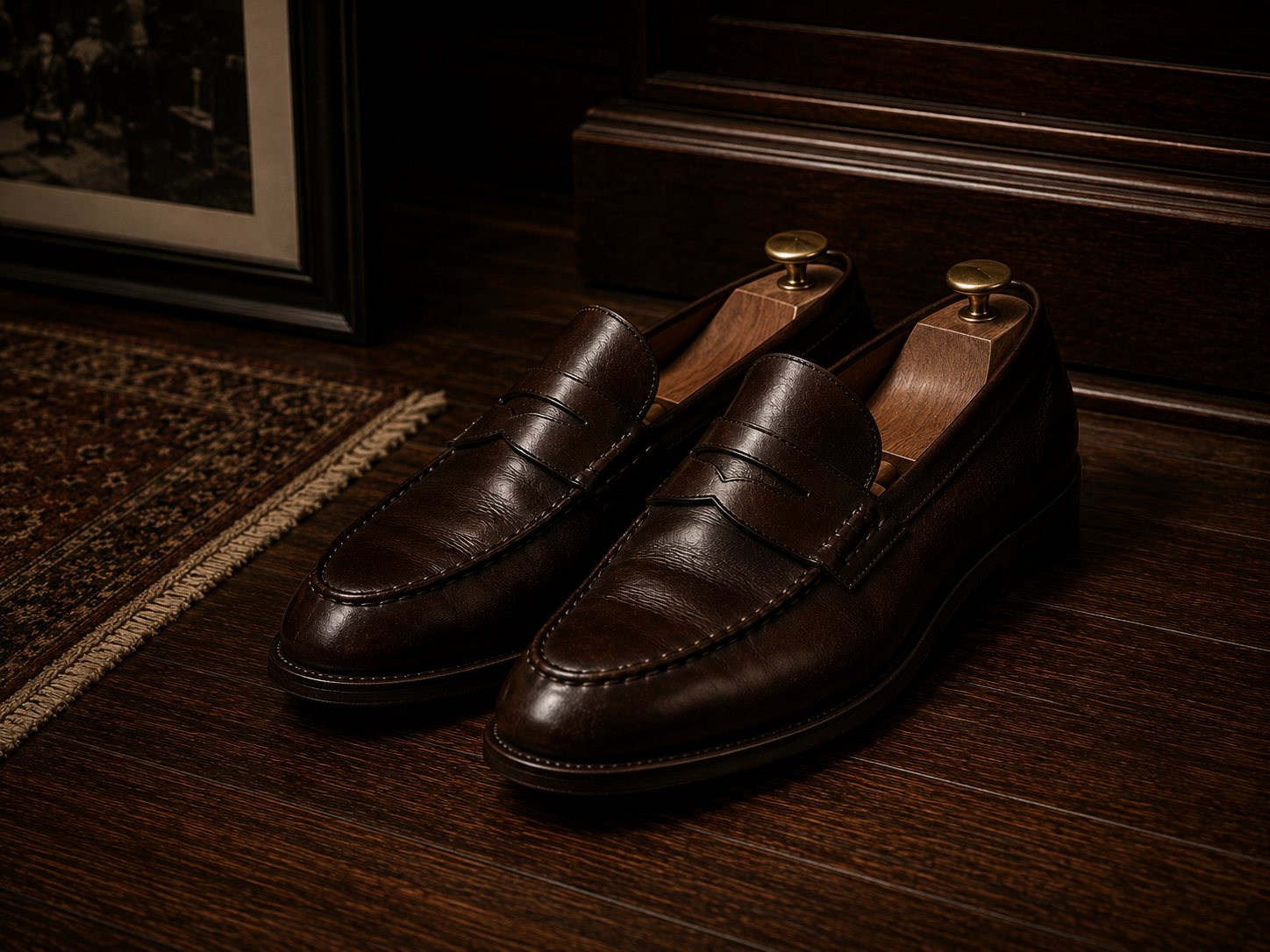
The Loafer
The loafer is one of the most useful shoes a man can own.
It sits between casual and dressed-up. It can sharpen simple clothing without making the outfit feel stiff. It works with trousers, denim, chinos, knitwear, polos, Oxford shirts, and casual tailoring.
A loafer gives a man range.
Why loafers matter
Loafers work because they are easy, but still composed.
They can be worn with:
- Wool trousers
- Chinos
- Dark denim
- Linen trousers
- Oxford shirts
- Knit polos
- Crewneck sweaters
- Casual jackets
They make a simple outfit feel more intentional.
A white T-shirt, dark denim, and loafers can look more considered than the same outfit with tired sneakers.
What kind of loafer to choose
Start with a restrained pair:
- Penny loafer
- Tassel loafer, if it suits the wardrobe
- Plain leather loafer
- Suede loafer for warmer or more casual settings
Useful colors include:
- Dark brown
- Black
- Burgundy
- Chocolate suede
- Tobacco suede
The shape matters. Avoid loafers that are too pointed, too square, too shiny, or too flimsy.
A loafer should feel relaxed, but not weak.
The Dress Shoe
Every man needs a clean leather dress shoe.
Even if he does not dress formally often, there will be moments when sneakers and loafers are not enough. Weddings, funerals, interviews, formal dinners, important work events, and tailored clothing require a shoe with more structure.
A dress shoe should be quiet, polished, and appropriate.
The main options
The best first dress shoe depends on lifestyle:
- Oxford: The most formal option. Best for suits, formal events, and conservative dress codes.
- Derby: Slightly less formal and more versatile. Works with suits, trousers, and some smart casual outfits.
- Wholecut: Clean and formal, but less necessary for most men.
- Monk strap: Can work, but should not be the first choice for most wardrobes.
For many men, a dark brown or black derby offers the best range. If the man wears suits often, a black or dark brown Oxford may come first.
What makes a dress shoe useful
Look for:
- Clean leather
- Simple shape
- Proper sole
- Good proportions
- Minimal decoration
- Comfortable fit
- Repairable construction, when possible
Avoid dress shoes that are too shiny, too long, too square, or covered in unnecessary detail.
A dress shoe should support the outfit.
It should not fight for attention.
The Boot
Boots give a wardrobe weight.
They are useful in colder weather, rougher conditions, and casual settings that need more presence than a sneaker. The right boot can work with denim, chinos, wool trousers, coats, overshirts, and knitwear.
A man’s first boot should fit his climate and lifestyle.
Good boot options
Strong choices include:
- Plain-toe leather boot
- Chelsea boot
- Chukka boot
- Service boot
- Desert boot
- Weather-resistant boot, if the climate requires it
A plain leather boot in brown or black is one of the easiest options to build around. A Chelsea boot can feel sharper. A chukka or desert boot can sit more casually between sneaker and dress shoe.
What to look for
Choose boots with:
- Durable leather or suede
- Good sole for the climate
- Clean shape
- Comfortable ankle fit
- Color that works with the wardrobe
- Construction that can handle regular use
Avoid boots that are overly rugged if the wardrobe is mostly refined. Avoid boots that are too sleek if the man needs something for bad weather or heavy wear.
The boot should match the life.
Not the fantasy.
The Casual Leather Shoe
A casual leather shoe fills the space between sneaker and dress shoe.
This is the shoe for days when sneakers feel too relaxed but dress shoes feel too formal. It adds structure without making the outfit stiff.
Depending on the wardrobe, this could be a suede derby, chukka, camp moc, driving loafer, or relaxed leather lace-up.
When this shoe helps
A casual leather shoe works well with:
- Chinos
- Dark denim
- Casual trousers
- Oxford shirts
- Polos
- Knitwear
- Overshirts
- Chore coats
It is useful for dinners, casual offices, dates, travel, and weekends where a man still wants to look considered.
What to avoid
Do not choose a casual leather shoe that looks confused.
Avoid:
- Hybrid dress sneakers with bulky soles
- Overly shiny casual shoes
- Square-toe slip-ons
- Heavy contrast stitching
- Decorative buckles or unnecessary details
- Shoes that look like office shoes trying to be casual
The best casual leather shoe is simple.
Good material. Clean shape. Easy to wear.
Which Pair Should You Buy First?
The right order depends on the man’s life.
A man who works in a formal office needs a different first shoe than a man who works remotely, dresses casually, and only attends formal events a few times a year.
Still, most wardrobes can be built in a simple order.
A practical buying order
For most men, start here:
- Clean everyday sneaker
- Loafer or casual leather shoe
- Dress shoe
- Boot
- Second sneaker or second leather shoe, if the wardrobe needs it
This order covers most daily situations.
The sneaker handles casual wear. The loafer or casual leather shoe sharpens simple outfits. The dress shoe covers formal settings. The boot handles weather, colder seasons, and heavier clothing.
Adjust by lifestyle
Change the order based on need:
- If the man wears suits often, buy the dress shoe earlier.
- If the climate is cold or wet, buy the boot earlier.
- If most days are casual, start with the sneaker and loafer.
- If the wardrobe leans refined, prioritize leather shoes over more sneakers.
A shoe should be bought for the life being lived.
Not the life being imagined.
How Many Pairs of Shoes Does a Man Need?
A man can cover most of his wardrobe with four to five pairs.
More can be added later, but the foundation does not need to be large. A focused rotation is easier to maintain, easier to wear, and less likely to create clutter.
A strong basic rotation
A practical shoe foundation includes:
- 1 clean everyday sneaker
- 1 loafer
- 1 dress shoe
- 1 boot
- 1 casual leather shoe or second sneaker
That is enough for most men to dress properly across the week.
The exact number matters less than the coverage.
Each pair should have a reason.
What Makes a Shoe Versatile
A versatile shoe works across more than one outfit.
It does not force the wardrobe to bend around it. It supports the core garments already there: denim, chinos, trousers, shirts, knitwear, jackets, and coats.
Versatility comes from shape, color, material, and condition.
Color
The easiest shoe colors are:
- White or cream for sneakers
- Black for sharper wardrobes
- Dark brown for leather shoes and boots
- Burgundy for loafers or dress shoes
- Chocolate suede
- Tobacco or snuff suede
Loud colors limit use. Bright sneakers, unusual soles, and high-contrast designs may work in some wardrobes, but they are harder to build around.
Shape
Shape should feel balanced.
Avoid shoes that are too bulky, too narrow, too pointed, or too square. The shoe should match the proportions of the clothes. Heavy trousers can handle heavier shoes. Slimmer trousers need a cleaner shape.
Material
Material affects how formal the shoe feels.
- Smooth leather feels sharper.
- Suede feels softer and more casual.
- Canvas feels relaxed.
- Technical mesh feels sporty.
- Patent leather is formal and rarely needed.
A man should understand what the material is saying before he wears it.
Condition
No shoe is versatile if it is poorly kept.
A dirty sneaker, scuffed loafer, collapsed heel, or stained suede shoe weakens the outfit. Condition matters as much as category.
Shoes to Avoid
Some shoes make a wardrobe harder to use.
They might be too loud, too trendy, too formal for daily wear, or too poorly shaped to look composed. A man should be careful with shoes that only work in one narrow context unless that context is part of his real life.
Avoid these early
Most men should avoid building around:
- Loud sneakers with oversized branding
- Square-toe dress shoes
- Overly pointed shoes
- Cheap shiny leather
- Dress shoes with extreme contrast soles
- Hybrid dress sneakers
- Shoes bought only for one outfit
- Shoes that are uncomfortable from the start
- Shoes that require constant explanation
A shoe should not need a defense.
It should work.
Avoid poor condition
Even the right shoe fails when neglected.
Do not keep wearing shoes that are:
- Badly scuffed
- Misshapen
- Odorous
- Torn
- Collapsed at the heel
- Worn through the sole
- Covered in dirt
- Past repair
A man does not need perfect shoes.
He needs shoes that are cared for.
Shoe Care Is Part of Dress
Shoes need maintenance.
They touch the ground every day. They collect dirt, water, salt, dust, sweat, and wear. If they are not cleaned and rotated, they break down faster and make the rest of the outfit look less considered.
Shoe care is not extra.
It is part of presentation.
Basic sneaker care
For sneakers:
- Wipe them down regularly.
- Clean soles when they get dark or stained.
- Remove dirt before it sets.
- Replace worn laces.
- Let them dry properly.
- Do not wear the same pair every day if they need rest.
White sneakers especially need attention. If they cannot be cleaned back into shape, replace them.
Basic leather shoe care
For leather shoes:
- Brush off dirt.
- Wipe with a cloth.
- Condition leather when needed.
- Polish when appropriate.
- Use shoe trees.
- Rotate wears.
- Repair soles and heels when the shoe is worth keeping.
Leather should not look dry, cracked, or neglected.
Basic suede care
For suede:
- Use a suede brush.
- Protect before heavy wear.
- Avoid unnecessary water exposure.
- Let wet suede dry naturally.
- Use an eraser or proper cleaner for marks.
Suede is not fragile when maintained, but it does require attention.
A man should know what his shoes need.
Matching Shoes to the Wardrobe
Shoes should work with the clothing around them.
A shoe that looks good alone may still fail in the wardrobe. The real test is whether it pairs naturally with the trousers, shirts, coats, and colors a man already owns.
What works with what
Use this as a simple guide:
- Clean sneakers: denim, chinos, casual trousers, T-shirts, overshirts, relaxed jackets.
- Loafers: chinos, wool trousers, dark denim, polos, Oxford shirts, knitwear, casual tailoring.
- Dress shoes: suits, formal trousers, elevated settings, dress shirts, tailored coats.
- Boots: denim, chinos, heavier trousers, knitwear, coats, field jackets, overshirts.
- Casual leather shoes: chinos, dark denim, casual trousers, button-downs, knitwear, relaxed jackets.
The goal is not strict rules.
The goal is better judgment.
Shoes should finish the outfit without distracting from it.