
Footwear
Build around the pairs
you actually wear.
Men’s shoes should cover work,
weekends, weather, and occasions.
weekends, weather, and occasions.
Start with footwear that fits well,
works with the wardrobe, and earns regular use.
works with the wardrobe, and earns regular use.
A strong rotation does not need every type of shoe.
It needs the right ones.
It needs the right ones.
Dress Shoes
Start with versatility
before formality.
Men’s dress shoes should suit the occasions you
actually attend. Oxfords are cleaner and more formal.
actually attend. Oxfords are cleaner and more formal.
Derbies are slightly more relaxed
and often easier to wear across settings.
and often easier to wear across settings.
Start with one useful pair.
Add more only when the wardrobe requires it.
Add more only when the wardrobe requires it.
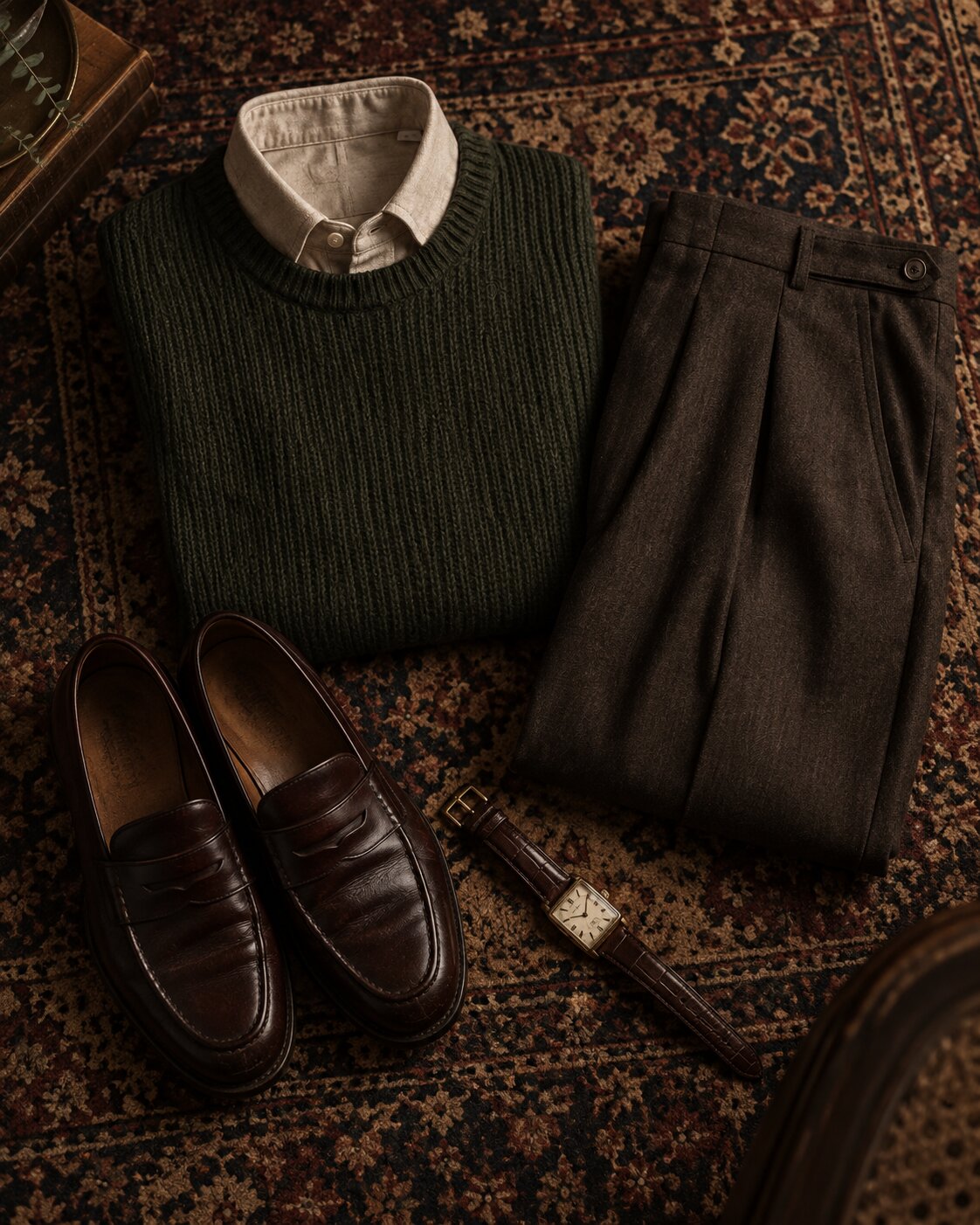
Loafers
Loafers bridge
formal and casual.
Men’s loafers work with tailoring, trousers,
denim, and warmer-weather dressing.
denim, and warmer-weather dressing.
Penny loafers are a dependable place to start.
Tassel loafers can carry a little more character.
Tassel loafers can carry a little more character.
A good loafer feels relaxed.
Not careless.
Not careless.
Sneakers
Sneakers should stay
clean and useful.
Men’s sneakers belong in the wardrobe when
they suit the setting and work with the clothes around them.
they suit the setting and work with the clothes around them.
Choose simple pairs with good proportion and easy color.
Condition matters. Once a pair is worn down beyond repair,
it stops doing its job well.
it stops doing its job well.
Boots
Boots should answer
a practical need.
Men’s boots bring more structure, weather protection, and durability. Chelsea boots offer a cleaner shape. Lace-up boots can handle rougher conditions and more casual wear.
Choose according to climate, material, sole, and how often the pair will be worn.
Fit
Fit comes before
the shoe.
A good pair should feel secure without
pinching or changing your stride. Look for:
pinching or changing your stride. Look for:
Heel
Secure without excessive slipping.
Secure without excessive slipping.
Toe Room
Enough space to move comfortably.
Enough space to move comfortably.
Width
No persistent pressure.
No persistent pressure.
Walking Comfort
Stable and natural in motion.
Stable and natural in motion.
Some materials soften with wear.
The wrong size or shape usually will not.
The wrong size or shape usually will not.
Care
Keep useful shoes
in service.
Clean them regularly. Let wet footwear dry properly. Condition leather when needed. Store pairs with care.
Repair a well-made pair when the structure is still sound. Replace it when fit, support, or condition can no longer be restored.
Maintenance is part of ownership.
Related Disciplines

The Standard
Good shoes support
the wardrobe quietly.
Every pair should fit properly, serve a purpose,
and be maintained well.
Let your life determine how many pairs you need.
The strongest rotation is not the largest one.
It is the one that keeps working.