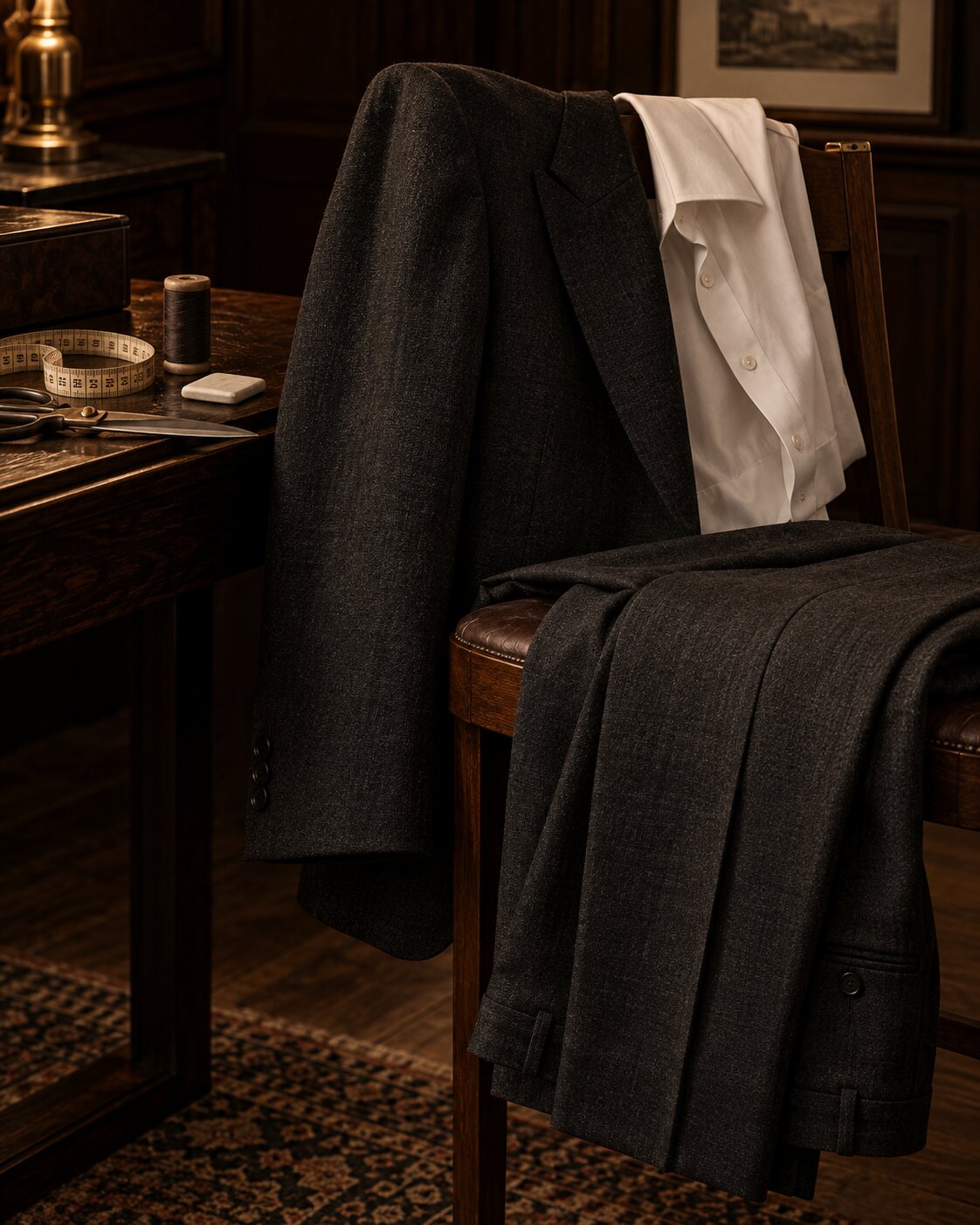
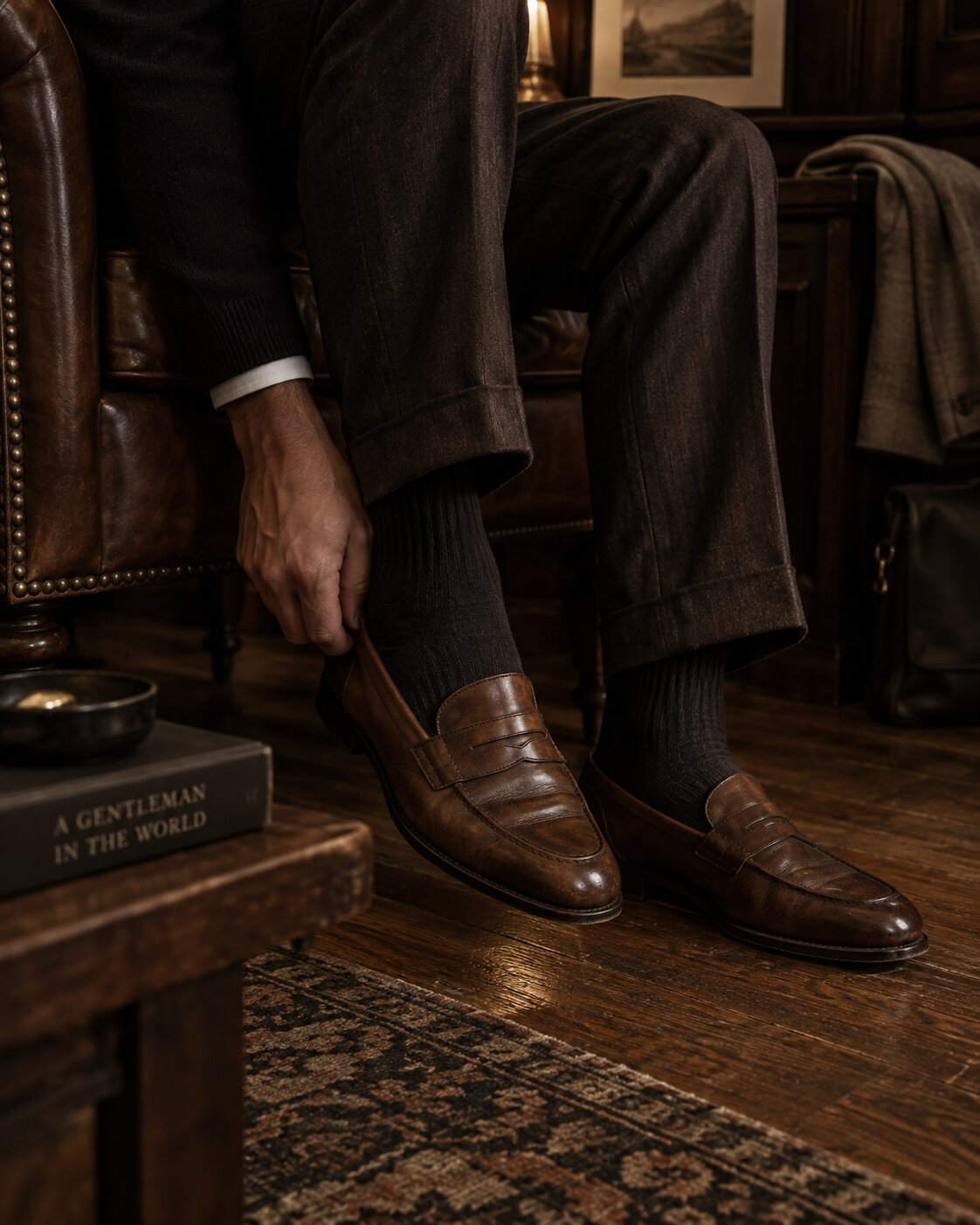
An essential wardrobe is not large.
It is deliberate.
Fewer clothes.
Better chosen.
Properly kept.
A man does not need everything.
He needs what works.
A core wardrobe begins with repeated use.
Not novelty. Not trend. Not the piece that looks good once and then sits untouched. The right garment should earn its place because it can be worn often, styled simply, and maintained well.
Before buying anything, ask:
If the answer is unclear, leave it.
A wardrobe built on impulse becomes scattered. One shirt needs special trousers. One jacket only works with one pair of shoes. One color throws off everything around it. That is not personal style. It is friction.
The better standard is simple: every piece should make the wardrobe easier to use.
A strong core garment should usually meet at least three of these standards:
This does not mean every garment has to be plain. It means every garment needs a reason to stay.
A core garment only works if it fits.
An Oxford shirt is not useful if the shoulders are wrong. Dark denim does not help if the break is sloppy. A coat does not make a man look finished if the sleeves fall past the hand.
Fit comes before brand, price, and trend.
A well-fitted garment gives the body shape without squeezing it. It allows movement without excess. It looks considered without looking forced.
Use these as the first check:
Tailoring matters here.
Not every piece needs to be custom. Most do not. But a man should know when to hem trousers, adjust sleeves, or take in a shirt. Small corrections change how the entire wardrobe works.
Poor fit makes good clothing look careless.
Proper fit makes simple clothing feel complete.
Shirts form the daily base of a wardrobe.
They sit close to the body. They frame the face. They decide whether an outfit feels casual, clean, mature, or unfinished.
A man does not need many kinds of shirts. He needs the right ones.
Start with plain T-shirts in colors that work with everything else:
The fabric should have enough weight to hang properly. The collar should hold its shape. The fit should be clean through the shoulder and chest.
Avoid thin shirts that twist after washing. Avoid loud graphics unless they are truly part of the man’s style. Most wardrobes are better served by restraint.
White and light blue are enough to begin.
An Oxford shirt works because it sits between casual and formal. It can be worn open over a T-shirt, tucked into trousers, layered under knitwear, or worn under a casual jacket.
It is useful because it does not try too hard.
A few casual button-down shirts can add range:
The shirt should support the outfit, not announce itself before the man speaks.
A good polo can be useful when it is chosen carefully. It should not look like default sportswear. Choose one with a clean collar, good fabric, and a fit that sits close without clinging.
Layering shirts also matter. A simple overshirt, flannel, or work shirt can add weight without making the outfit complicated. It should sit cleanly over a T-shirt and under outerwear.
The standard for shirts is simple:
Trousers carry the wardrobe more than most men realize.
Shirts are often noticed first, but trousers decide proportion. They shape the line of the body. They determine whether the outfit looks balanced, tight, sloppy, or composed.
Start with chinos, but choose them carefully.
A proper chino has weight, structure, and a clean leg. It should not feel thin, clingy, or overly tight. Khaki, navy, olive, and stone are the strongest starting points.
Chinos work because they sit between denim and wool trousers. They can be worn with:
They give the wardrobe range without making it feel formal.
Gray wool trousers are one of the most useful pieces a man can own.
They do not need to feel stiff. When cut properly, wool trousers can be worn with knitwear, a tucked T-shirt, an Oxford shirt, or a clean jacket. Navy, brown, or charcoal can follow after gray.
Wool trousers help a man look composed without looking dressed up for the wrong room.
Dark denim belongs in the core wardrobe.
Start with one pair in dark indigo or black. The fit should be straight or slightly tapered. Not skinny. Not oversized unless the rest of the wardrobe supports that silhouette.
Dark denim works because it can dress down without becoming careless. It pairs well with:
Fatigue pants, drawstring trousers, or relaxed cotton trousers can work when the fabric and cut are controlled. Comfort does not excuse poor proportion.
Avoid trousers that:
A man’s trousers should give him shape.
Not restriction. Not excess. Shape.
Knitwear gives a wardrobe depth.
It adds texture, warmth, and ease. It helps a man look dressed without adding noise.
Start with a crewneck sweater in a color that works with most of the wardrobe:
The fabric should have enough weight to hold its form. Merino wool, lambswool, cotton, and cashmere blends can all work depending on climate and budget.
A crewneck can be worn over a T-shirt or Oxford shirt. It can sit under a coat. It can work with denim, chinos, or wool trousers.
A cardigan is worth owning when it has enough structure.
Avoid thin, flimsy cardigans that collapse on the body. A better cardigan should feel closer to a soft jacket than a weak sweater. A dark cardigan over a white T-shirt or Oxford shirt can carry a quiet outfit well.
Overshirts are useful because they sit between shirt and jacket.
Good options include:
The right overshirt adds structure without making the outfit feel dressed up.
Layering does not need to be complicated. Start with combinations that always work:
A man does not need complicated styling.
He needs pieces that work together.
Outerwear shapes the first impression.
It is often the first thing people see. It can make simple clothing feel complete, or it can make a good outfit look unfinished.
Start with three pieces: one proper coat, one casual jacket, and one rain layer.
The exact coat depends on climate, but the principle is the same. It should have weight, structure, and restraint.
Strong options include:
Useful colors include navy, charcoal, camel, brown, and black.
The coat should fit over layers without swallowing the body. The shoulder should sit cleanly. The sleeve should end with control. The length should feel intentional.
A casual jacket gives the wardrobe everyday range.
Choose based on lifestyle:
The right casual jacket should work with denim, chinos, T-shirts, knitwear, boots, loafers, or clean sneakers.
Every man needs some answer for weather.
Not every wardrobe needs a technical shell. For most men, a simple raincoat, mac coat, or clean water-resistant jacket is enough.
Outerwear is where many men overbuy. Too many jackets create the same problem as too many shirts: more choice, less order.
Start with what the life requires. Add only when there is a real gap.
Color should make the wardrobe easier, not harder.
The easiest colors to build around are:
These colors work because they sit well together. They allow repetition without looking careless.
A restrained palette might look like this:
These pieces can move around each other. That is the point.
A man can wear color, but color should be chosen with control. Deep green, burgundy, rust, cream, and muted blue can work well. Bright colors require more skill and more restraint elsewhere.
All-black can work, but it is not as simple as it looks.
Black fades. Black collects lint. Black can look flat if every piece has the same surface. It can hold heat and show wear quickly.
If a man builds around black, he needs texture and contrast:
The details matter.
A restrained palette is not boring. It is disciplined.
The weakest clothes in a wardrobe are the ones that only work once.
They create the illusion of variety. In practice, they create friction.
Avoid buying pieces that depend on one narrow use:
Clothes are not owned alone. They live in a wardrobe.
A garment should be judged by how well it works with the whole. If it needs too much effort, it probably does not belong.
This does not mean every piece must be plain. Texture can add interest. Fabric can add weight. Fit can add presence. Shoes can sharpen the line. A coat can finish the shape.
But every piece needs a reason.
Restraint does more than noise.
Shoes ground the wardrobe.
They decide how the rest of the clothing reads. The same trousers can feel casual, sharp, or careless depending on what sits below them.
Most men can begin with three pairs:
The right shoes should support denim, chinos, trousers, knitwear, coats, and casual jackets without needing too much explanation.
Shoes should be maintained.
A simple care routine is enough:
Collapsed shoes weaken the entire outfit.
Accessories should be quiet and useful.
Start with:
Do not let accessories become decoration without use. They should support the standard, not compete with it.
A wardrobe is not finished when it is bought.
It has to be kept.
Care is part of ownership. A good shirt with a stained collar is no longer doing its job. A sweater covered in pills needs attention. Shoes with collapsed heels change the entire outfit.
The better a man cares for his clothes, the less he needs to replace them.
Start with the habits that matter most:
Maintenance is not extra.
It is the standard.
A core wardrobe should not be built in one haul.
That usually leads to mistakes. A man buys too much too quickly, before he knows what actually works. He ends up with a wardrobe that looks complete on hangers but does not function in daily life.
Build slowly. Wear the piece. Learn from it. See what stays in rotation. See what never gets touched.
Start with the gaps that affect daily life.
If the trousers are weak, fix the trousers. If every shirt looks tired, replace the shirts. If the shoes make every outfit feel unfinished, start there.
A simple order works well:
This does not need to happen quickly.
A man should not rush the standard. He should build it with attention, piece by piece.
There is no fixed number.
A useful core wardrobe can begin with fewer pieces than most men think. The point is not to limit a man forever. The point is to give the wardrobe order before adding more.
A practical core might include:
That is enough to create range.
Not endless range. Useful range.
Once the core is strong, additions become clearer. A man can see what is missing because the foundation is already in order.

A core wardrobe begins with repeated use.
Not novelty. Not trend. Not the piece that looks good once and then sits untouched. The right garment should earn its place because it can be worn often, styled simply, and maintained well.
Before buying anything, ask:
If the answer is unclear, leave it.
A wardrobe built on impulse becomes scattered. One shirt needs special trousers. One jacket only works with one pair of shoes. One color throws off everything around it. That is not personal style. It is friction.
The better standard is simple: every piece should make the wardrobe easier to use.
A strong core garment should usually meet at least three of these standards:
This does not mean every garment has to be plain. It means every garment needs a reason to stay.
A core garment only works if it fits.
An Oxford shirt is not useful if the shoulders are wrong. Dark denim does not help if the break is sloppy. A coat does not make a man look finished if the sleeves fall past the hand.
Fit comes before brand, price, and trend.
A well-fitted garment gives the body shape without squeezing it. It allows movement without excess. It looks considered without looking forced.
Use these as the first check:
Tailoring matters here.
Not every piece needs to be custom. Most do not. But a man should know when to hem trousers, adjust sleeves, or take in a shirt. Small corrections change how the entire wardrobe works.
Poor fit makes good clothing look careless.
Proper fit makes simple clothing feel complete.
Shirts form the daily base of a wardrobe.
They sit close to the body. They frame the face. They decide whether an outfit feels casual, clean, mature, or unfinished.
A man does not need many kinds of shirts. He needs the right ones.
Start with plain T-shirts in colors that work with everything else:
The fabric should have enough weight to hang properly. The collar should hold its shape. The fit should be clean through the shoulder and chest.
Avoid thin shirts that twist after washing. Avoid loud graphics unless they are truly part of the man’s style. Most wardrobes are better served by restraint.
White and light blue are enough to begin.
An Oxford shirt works because it sits between casual and formal. It can be worn open over a T-shirt, tucked into trousers, layered under knitwear, or worn under a casual jacket.
It is useful because it does not try too hard.
A few casual button-down shirts can add range:
The shirt should support the outfit, not announce itself before the man speaks.
A good polo can be useful when it is chosen carefully. It should not look like default sportswear. Choose one with a clean collar, good fabric, and a fit that sits close without clinging.
Layering shirts also matter. A simple overshirt, flannel, or work shirt can add weight without making the outfit complicated. It should sit cleanly over a T-shirt and under outerwear.
The standard for shirts is simple:
Trousers carry the wardrobe more than most men realize.
Shirts are often noticed first, but trousers decide proportion. They shape the line of the body. They determine whether the outfit looks balanced, tight, sloppy, or composed.
Start with chinos, but choose them carefully.
A proper chino has weight, structure, and a clean leg. It should not feel thin, clingy, or overly tight. Khaki, navy, olive, and stone are the strongest starting points.
Chinos work because they sit between denim and wool trousers. They can be worn with:
They give the wardrobe range without making it feel formal.
Gray wool trousers are one of the most useful pieces a man can own.
They do not need to feel stiff. When cut properly, wool trousers can be worn with knitwear, a tucked T-shirt, an Oxford shirt, or a clean jacket. Navy, brown, or charcoal can follow after gray.
Wool trousers help a man look composed without looking dressed up for the wrong room.
Dark denim belongs in the core wardrobe.
Start with one pair in dark indigo or black. The fit should be straight or slightly tapered. Not skinny. Not oversized unless the rest of the wardrobe supports that silhouette.
Dark denim works because it can dress down without becoming careless. It pairs well with:
Fatigue pants, drawstring trousers, or relaxed cotton trousers can work when the fabric and cut are controlled. Comfort does not excuse poor proportion.
Avoid trousers that:
A man’s trousers should give him shape.
Not restriction. Not excess. Shape.
Knitwear gives a wardrobe depth.
It adds texture, warmth, and ease. It helps a man look dressed without adding noise.
Start with a crewneck sweater in a color that works with most of the wardrobe:
The fabric should have enough weight to hold its form. Merino wool, lambswool, cotton, and cashmere blends can all work depending on climate and budget.
A crewneck can be worn over a T-shirt or Oxford shirt. It can sit under a coat. It can work with denim, chinos, or wool trousers.
A cardigan is worth owning when it has enough structure.
Avoid thin, flimsy cardigans that collapse on the body. A better cardigan should feel closer to a soft jacket than a weak sweater. A dark cardigan over a white T-shirt or Oxford shirt can carry a quiet outfit well.
Overshirts are useful because they sit between shirt and jacket.
Good options include:
The right overshirt adds structure without making the outfit feel dressed up.
Layering does not need to be complicated. Start with combinations that always work:
A man does not need complicated styling.
He needs pieces that work together.
Outerwear shapes the first impression.
It is often the first thing people see. It can make simple clothing feel complete, or it can make a good outfit look unfinished.
Start with three pieces: one proper coat, one casual jacket, and one rain layer.
The exact coat depends on climate, but the principle is the same. It should have weight, structure, and restraint.
Strong options include:
Useful colors include navy, charcoal, camel, brown, and black.
The coat should fit over layers without swallowing the body. The shoulder should sit cleanly. The sleeve should end with control. The length should feel intentional.
A casual jacket gives the wardrobe everyday range.
Choose based on lifestyle:
The right casual jacket should work with denim, chinos, T-shirts, knitwear, boots, loafers, or clean sneakers.
Every man needs some answer for weather.
Not every wardrobe needs a technical shell. For most men, a simple raincoat, mac coat, or clean water-resistant jacket is enough.
Outerwear is where many men overbuy. Too many jackets create the same problem as too many shirts: more choice, less order.
Start with what the life requires. Add only when there is a real gap.
Color should make the wardrobe easier, not harder.
The easiest colors to build around are:
These colors work because they sit well together. They allow repetition without looking careless.
A restrained palette might look like this:
These pieces can move around each other. That is the point.
A man can wear color, but color should be chosen with control. Deep green, burgundy, rust, cream, and muted blue can work well. Bright colors require more skill and more restraint elsewhere.
All-black can work, but it is not as simple as it looks.
Black fades. Black collects lint. Black can look flat if every piece has the same surface. It can hold heat and show wear quickly.
If a man builds around black, he needs texture and contrast:
The details matter.
A restrained palette is not boring. It is disciplined.
The weakest clothes in a wardrobe are the ones that only work once.
They create the illusion of variety. In practice, they create friction.
Avoid buying pieces that depend on one narrow use:
Clothes are not owned alone. They live in a wardrobe.
A garment should be judged by how well it works with the whole. If it needs too much effort, it probably does not belong.
This does not mean every piece must be plain. Texture can add interest. Fabric can add weight. Fit can add presence. Shoes can sharpen the line. A coat can finish the shape.
But every piece needs a reason.
Restraint does more than noise.
Shoes ground the wardrobe.
They decide how the rest of the clothing reads. The same trousers can feel casual, sharp, or careless depending on what sits below them.
Most men can begin with three pairs:
The right shoes should support denim, chinos, trousers, knitwear, coats, and casual jackets without needing too much explanation.
Shoes should be maintained.
A simple care routine is enough:
Collapsed shoes weaken the entire outfit.
Accessories should be quiet and useful.
Start with:
Do not let accessories become decoration without use. They should support the standard, not compete with it.
A wardrobe is not finished when it is bought.
It has to be kept.
Care is part of ownership. A good shirt with a stained collar is no longer doing its job. A sweater covered in pills needs attention. Shoes with collapsed heels change the entire outfit.
The better a man cares for his clothes, the less he needs to replace them.
Start with the habits that matter most:
Maintenance is not extra.
It is the standard.
A core wardrobe should not be built in one haul.
That usually leads to mistakes. A man buys too much too quickly, before he knows what actually works. He ends up with a wardrobe that looks complete on hangers but does not function in daily life.
Build slowly. Wear the piece. Learn from it. See what stays in rotation. See what never gets touched.
Start with the gaps that affect daily life.
If the trousers are weak, fix the trousers. If every shirt looks tired, replace the shirts. If the shoes make every outfit feel unfinished, start there.
A simple order works well:
This does not need to happen quickly.
A man should not rush the standard. He should build it with attention, piece by piece.
There is no fixed number.
A useful core wardrobe can begin with fewer pieces than most men think. The point is not to limit a man forever. The point is to give the wardrobe order before adding more.
A practical core might include:
That is enough to create range.
Not endless range. Useful range.
Once the core is strong, additions become clearer. A man can see what is missing because the foundation is already in order.